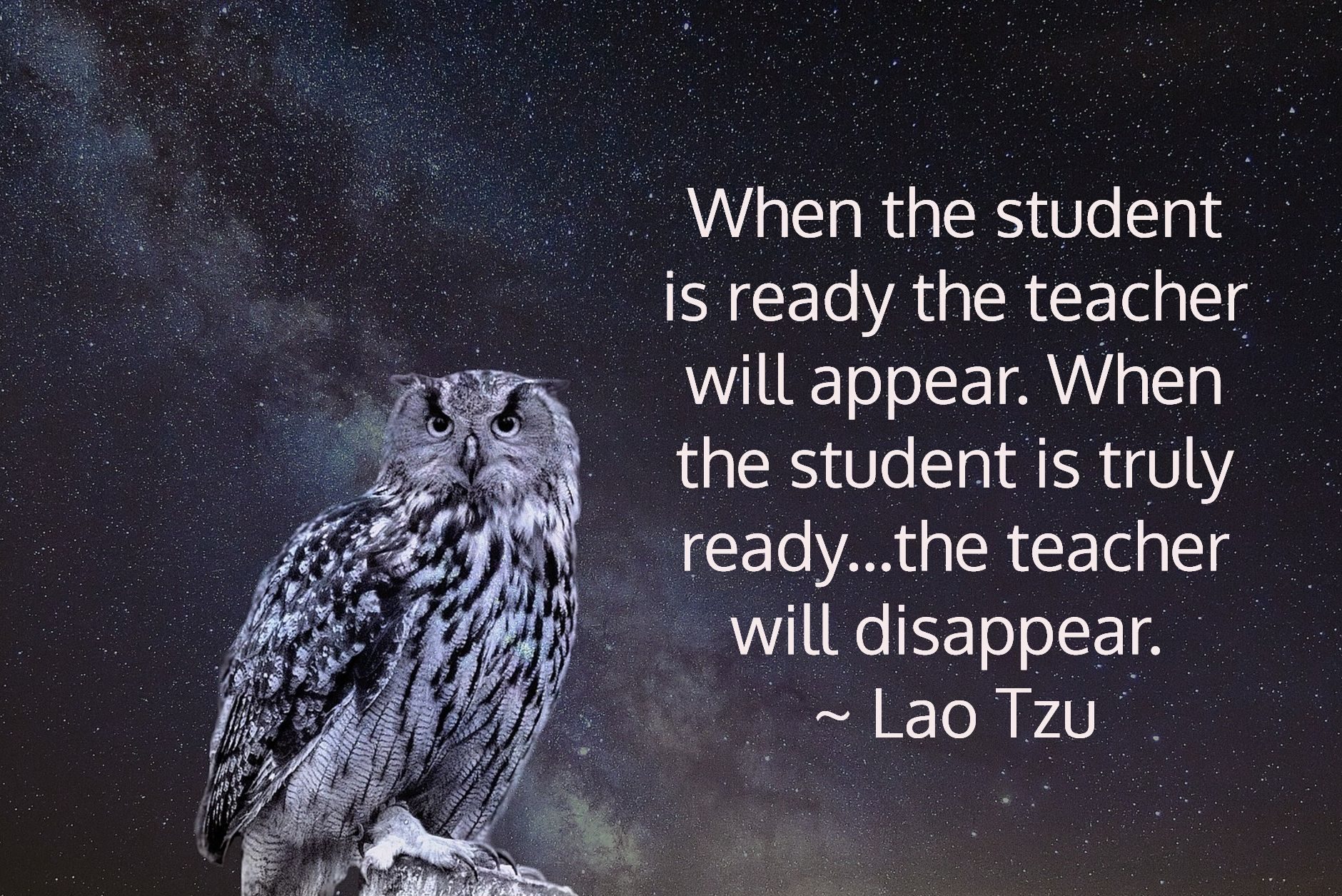
Mentorship is a contact sport thus engagement of the mentees is as important as the mentor. The outcomes work best when the mentor and mentee actively work on finding the best methods and paths for goal accomplishment. For effective journey the mentees role is as important as the mentors. Like they say that the right teacher or the mentor arrives when the student is ready. Thus the student or the mentee actually attracts the right teacher-mentor in life.
6 Traits that can help you get best of Mentorship are:
Patience : Committing to the mentorship journey requires patience. When you set your vision for yourself, the milestones are achieved over a period of time and not over night. Thus real goal accomplishments generally take years and not weeks, and one needs to be in it for a long haul.
Transparency: Also important to share the long term and short term goals with complete transparency and trust. This also helps to nurture this long term relationship for best outcomes. If there is constant doubt then the journey gets disrupted. Thus having candid discussions helps the relationship flourish with best outcomes.
Open to Receiving and Giving Feedback -Evaluating the outcomes from time to time and also understanding the shortfalls can go a long way in getting the best results. Marshall Goldsmith’s book, ‘What got you here wont get you there’ is the best book that can support your understanding of how arrogance of your success can ruin your growth and moving to larger potentials as a leader.
Purpose Clarity -Clarity in purpose towards the mentoring journey is the compass to success. Devising an action plan that is headed to the goals and purpose is very critical for the outcomes to be realised
Personal Reflection before the mentoring -coaching sessions – Prior to every session one needs to evaluate the overall progress and roadblocks to better use the coaching -mentoring conversations. This also helps in understanding if the mentoring dialogue is taking you towards your goals.
Celebrating Small milestones -Its also important to acknowledge self and the mentor from time to time to stay motivated towards the long term goals and overall purpose. This also helps the team gear up for larger goals and accomplishments in future and also build a meaningful journey. Todd’s book Every Little Win: How Celebrating Small Victories Can Lead to Big Joy is very helpful to get started.
What are you short term and long term goals? What’s your life purpose? Do you have a mentor who can support your journey? Ask for a chemistry session in the link below.
In the knowledge economy, people are the capital of an organization. Even post-pandemic many organizations are struggling in context to keeping their workforces productive while some other organizations are leveraging the work from home mechanism to reduce costs and increase profit margins. In the new normal post-pandemic, 60% of the global workforce is working from home, especially in the ITES sectors. Communication and Productivity science endorses that the best form of productivity and performance since the Industrial revolution has been management by walking around your office and also face to face people interaction. However, in these times the safety of employees along with the welfare of business can be better managed by the team which has the ownership of people and also every leader -manager who is also responsible for the welfare of their people. Post pandemic HR has been entrusted with the pivotal role of making an optimized work ecosystem. 6 Ways in which HR can play a quintessential role in keeping employees engaged and also leveraging the best in the environment:
Building Leadership trust. Enabling a trusting ecosystem is the first step to encourage the employees to give their best work. Best performances and profitability can be experienced through long-term trust-building with the team. After all the leadership is gaining results because of the team. Having a regular virtual town hall, leadership skips, and also invitations for proactive feedback can go a long way in creating a trusting environment. Not just HR, even the leadership at various levels and verticals need to be engaged in this. Keeping your promise is one of the essential elements in keeping up the trust quotient; as if its only lip service and the reality is something else, then the trust gets depleted.
Win-Win Vision. One of the fundamental ways to ensure employee retention and also constantly attracting the best talent is to think beyond perks and long-term career growth and win-win strategy. When the employer is able to facilitate long-term returns, then it has truly created machinery to churn out the best experts and leaders.
Staying Agile. For HR to stay agile while facilitating results for the employers and the employees is very critical to address current and long-term challenges. Working around business and employee needs is a way to realize the best accomplishments. Whether it’s business slowdown due to pandemics, recession, etc the hr team needs to stay tuned up to the issues and pre-empt the solutions. If a company doesn’t acknowledge these changes and adapt accordingly, it may risk losing its top talent… Research reveals that every time a business replaces a salaried employee, it costs 7 to 10 months’ salary of the person on average. Also innovating ways to incentivize the employees. In this case, consider replacing travel or conveyance benefits with child care benefits – such as providing reimbursements for in-home babysitters or virtual tutors. As you adjust your benefits, use pulse surveys to gauge the impact of these new initiatives.
Prioritize Training. During the pandemics and also new normal, using new online technologies and also platforms are getting essential, thus one needs to keep the workforce up to speed on the same, through regular training and information workshops. Training also for health habits and mental welfare to be organized, to avoid any burnout while working prolonged hours. Also, leadership development during these times to give special emphasis on how to do work-life balance for their teams while working from home.
Work on Subtle Branding Strategies. Branding internally and externally about your people’s practice and principles can not only attract the best talents for you; but also encourage your earlier employees to reach out to make a come back. Especially during pandemic times, empathy is a great tool to demonstrate your brand values and orientations. Hiring strategies during new normal can also help branding, virtual interactions with candidates talking about your company culture and values, is also a great way to orient prospective employees. How you manage onboarding -welcome and team interactions can have a lasting impact on your hiring/branding investment.
Candid Conversations. Sometimes the delay tactics can backfire…thus it is always better to be upfront and have transparent conversations. While manipulation can get results it may haunt your conscience in the future. Right from hiring to retiring having a straight forward conversation can go a long way in establishing you as a true professional and for your organization as a people-friendly environment to work in. Recreating the organization’s values, mission, and vision to match the challenging times and also meet the needs in the industry.
Right now, your employees maybe stressed and challenged and they need your support to navigate the turf. That’s why we encourage companies to use this time to offer more virtual support, whether that’s in the form of introducing a mentoring, training, coaching or counselling to leverage the best results around them. Also organise various forums of discussion to address their challenges or issues.
As we all navigate this new normal as mentors-leaders -coaches or HR leaders let’s explore how to adapt to new practices, perspectives, and programs … To learn how our mentoring, training, counselling and coaching programs can support your remote workforce, do write to us – support@success-studios.com
Meritocracy is co-existing and appreciating others while accepting self…
Self Esteem is the foundational trait to every leadership success. Self-respect, self-worth, and Confidence are the three pillars of self-esteem that also play a role in the Emotional intelligence of a person. Leaders with low self-esteem are most often the reason for their workforce to be demotivated and eventually quit the environment or the system. Recently came across a hiring person’s interaction with a fresher, which was extremely condescending and demoralizing to an extent that the fresher chose to pursue something else rather than working in a big brand with unfriendly -unhappy -unempathetic people. Low self-esteem is a double-edged sword that not only impacts the self but also the environment. Such people could be detrimental to the morale of the workforce and instigate others towards a defiant work culture. A leader who is always right without the need to understand his potential if he worked with others has already compromised his way forward. Organizational values also play a significant role to determine the hiring -retention and development process to ensure that people are always nurturing this trait. Leaders who work on their self-esteem know that their value is in seeing the best in others while accepting their talents and weaknesses. They find comfort in who they are and who they need to work together. None of us are as powerful alone yet when we have the right team and people around us, our power is accentuated. Low self-esteem can not only deteriorate a leader’s performance, but it can also give one a label like a micromanager, autocratic, narcissist, bully, insecure, etc. The list for a leader stuck in this trap is endless and damaging to one’s image as a leader.
6 Traits of a person with low self esteem
Constantly trying to control everyone and everything around. A person who needs to control others and always rule everyone’s life is suffering from a deficit of self-esteem.
Envying the peace and prosperity of others in the environment. To live and let live is the first sign of a humanitarian and thus the basic requirement for any leader. If someone is envious of others and investing time in the same, it’s surely a sign of low self-esteem syndrome.
Need to Find a scapegoat. When things go wrong such people tend to blame others. A leader who can not own up to the mistakes is setting the wrong example for his team. Irrespective of whose mistake it is in the team, the leader needs to be able to shoulder the responsibility of things going wrong.
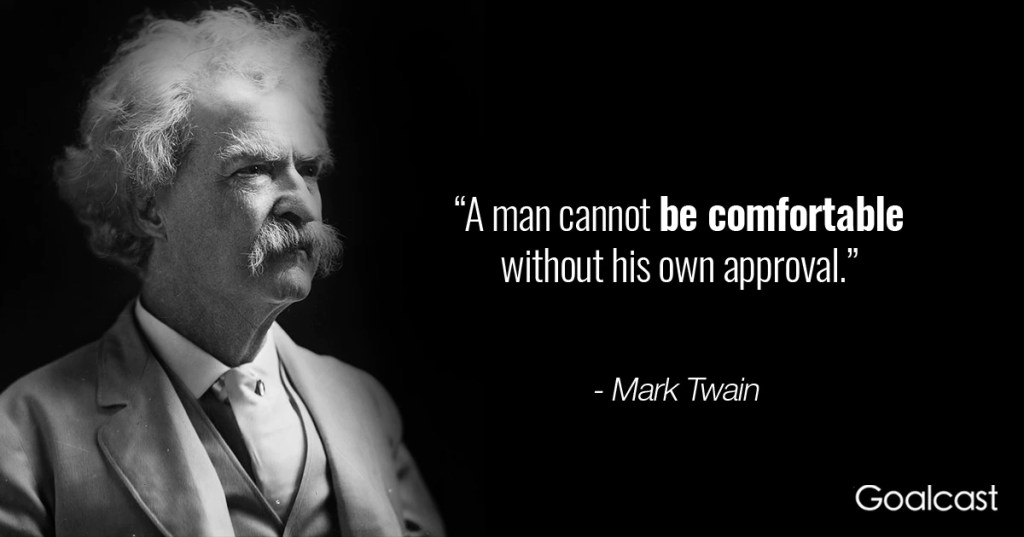
Needing the world to endorse their talents. A leader by default is on the pedestal and under the microscope thus seeking endorsement and approval from others is another critical sign that the LSE (low self-esteem) is dominant in the person.
Taking Credit or pride and portraying one is big. We are all here to play our roles and do our commitments. However, someone who has to constantly take credit for all good that happens is surely not leader material. In fact, this too is instigated by the LSE syndrome) When an action or deed alone can define you as a winner… when your worth is determined by the things you have or do; then it’s time to check your LSE score. Trying to prove to be worthy is a futile journey.
Being too Fragile. When a person is too fragile and tends to read between lines to find how they are being targeted or insulted etc…When a person has to hold on to, old or bad memories to feel upset with people then one is surely demonstrating LSE and being too fragile.
Finding COMFORT IN BEING YOU…
The good news is that one can work on self-esteem and gradually reverse the syndrome. It takes personal effort and consciousness to gradually get control of it. Low self-esteem in leadership can impact a person’s ability to deal with views that are in conflict or even people with different personalities.
Self Esteem is being confident in your own skin!
6 Ways to transition from LSE to gaining self worth and self esteem
What is the DIY to shift delete LSE from life? How can one feel confident when life gives you a new problem to solve every day? What are the simple steps to get started? After all of us have our idiosyncrasies! What is the way to understand different kinds of people in this world and be adaptable? What is the way to take ownership of relationships -ventures or even projects that have not gone well and rise beyond the same? Some of the best ways to build self-esteem are:
1. Remember the GOOD TIMES
Recall the times when you have succeeded as a person, professional, or project team. Whether it’s people interaction that you cherish or even a professional task. One of the best ways to forgive others and even find personal redemption that has helped me in this regard is to try and recall all the good they have ever done or even the realizations/learnings that have been facilitated due to the misgivings.
2. Build the INNER CIRCLE
In coaching parlance we call them Peer coach… a person who you can share your life with In coaching parlance, we call them Peer coach… a person who you can share your life with …without being judged or criticized. This could also be friends-family -facilitators or mentors. A board of members who are personally invested in your actions -accomplishments, and aspirations.
3. Clarification of DESIRABLE ROLE -RESPONSIBILITY -REWARD
As a leader, a person is a facilitator, not a superman who has to do all and take all the credit. Being able to accept oneself is one of the important aspects in getting started. It’s always good to understand the expectations of oneself and others before starting. If something fails it should not reduce one’s image or self-esteem. There is always the opportunity to team up with right skills or even try something else.
4. Failures or Successes are LEARNING OPPORTUNITIES
Willingness to constantly learn irrespective of failures or success is critical to self-esteem in the long run. It allows a person to adopt the right/empowering principles -values -methods -practice -skills -knowledge -time allocation -behaviors and discard any disempowering ones.
5. Exploring BEYOND COMFORT ZONES
We all have a complacency to go into unchartered territories beyond our comfort zones. As long as these spaces are within our value systems exploring them can sure bring new ways of establishing your self-esteem. Innovating ways to reinvent yourself is a good way to keep the adventure alive; after all life itself is uncertain!
6. Being FRAGILE PROOF
The fragile proof is a term I came across some years back while conversing with an industry colleague. It’s an important trait to have to constantly practice self-esteem and also get the best out of people around you, rather than finding faults in them. When one is fragile proof one doesn’t need to constantly sabotage one’s path of joy and happiness by overthinking others and their role in our life.
Have you tried your self-esteem assessment? Do you think we are born with high or low self-esteem? Is it worth nurturing self-esteem in our life? Looking forward to hear more from you about your journey through leadership and managing your self-worth at all times.
As per Hindu tradition, Lord Ganesha is the formless Divinity – encapsulated in a magnificent form, for the benefit of the devotee. Son of Shiva and Parvathi he symbolises supreme consciousness and omnipresence. Gan means group, and this supreme group of existence is governed by Lord Ganesha. As the symbol of supreme consciousness he is all pervading and brings order to this universe. Ganesha is the energy from which everything manifests and into which everything will dissolve.
11 Leadership values represented by Lord Ganesha that can empower anyone in pursuit of excellence are:
Ganesha’s big ears signify great listening skills. Elephant’s ear makes an ideal combination for a strategic leader, as he needs to listen to everything with a calm mind. An elephant listens more and listens better with its large and sensitive ears, indicating that a true leader pays detailed attention to everything from small to large. Listening makes a leader empathetic and also gives the finer details he needs for execution.
Ganesha’s big belly represents generosity and total acceptance. As a leader, if one is not able to let go of disempowering thoughts -emotions -experiences, one would not be able to assume the value of total acceptance and generosity which is the foundation of the leadership journey. The stomach also signifies that one can digest all good and bad in the ecosystem and thereby appreciate and create more good for all. A strategic leader should have a very fat stomach so that he can digest all confidential information and secrets shared with him by others. He should have the capacity to maintain trust and confidentiality with his peers and team.
Ganesha also has a single tusk which signifying retain good and throw away bad. When we as leaders can filter the good from the noise we are creating a positive environment for our people where they can see the best of everything and emulate the same; rather than get swayed by the negatives.
Ganesha has Four Human hands. It symbolises that strategic leaders should focus on all aspects of the business, ‘Dharma’, ‘Artha’, ‘Kama’, ‘Moksha’, in other words, rightfulness, profitability, happiness, and in sync with the vision. All four aspects should be targeted to achieve long-term success for a strategic leader. The leader needs to constantly protect the welfare of his followers and community. The hands also signify; that we have all come from the earth and need to merge with the same one day, and our pride in anything is futile.
Ganesha holds modaka as a symbol of reward for sadhana and excellence. As a leader, one needs to reward the right behaviours and actions, to ensure the best practices to be upheld.
Ganesha, the elephant-headed God travel on something as small as a mouse…This too is a representation of strong willpower to abstain from an untamed desire that can cause disharmony. The mouse also snips and nibbles away at ropes that bind. The mouse is like the mantra which can cut through sheaths and sheaths of ignorance, leading to the ultimate knowledge represented by Ganesha!
Ganesha also has prasada at his feet signifying he has the ability to serve the whole world with his wisdom. As a leader if one is not able to serve others one is not doing justice to their role. Creating more leaders and also granting opportunity is the sign of a true leader.
Ganesha’s trunk signifies high efficiency and adaptability. The leader’s efficiency and adaptability to the diverse experiences and people types is true testimony of his potential to create for all in spite of challenges around.
Ganesha’s small mouth signifies talking less. Leaders need to talk less and create more action in their environment. Leaders need to focus more on their actions and deeds, to drive a culture of action speaks louder than words.
Ganesha’s small eyes signify his eye for details. The leader too needs to nurture this value to ensure observation of what transpires around and make the best possibilities for his team. The eyes of an elephant are located on the sides of the head and therefore provide better vision. A strategic leader must have more clarity during the crisis or uncertain times, meaning that he should provide direction and vision to his team during uncertain times.
Ganesha’s big head is a representation of thinking big. The brain of an elephant is heavier than a man’s. They show grief, humour, compassion, cooperation, self-awareness, tool use, playfulness, and excellent learning abilities. So, the elephant’s head represents emotional intelligence. Elephants have a delicate head so unlike other animals, they avoid head-on collisions. This is an indication that a leader must not indulge in conflicts when provoked by others. A leader’s vision is the way to great performances -potentials -productivity and prosperity for all.
Our ancient Rishis were so deeply intelligent that they chose to express Divinity in terms of symbols rather than words since words change over time, but symbols remain unchanged.
Let us keep the deep symbolism in mind as we experience the omnipresent in the form of the elephant God, yet be fully aware that Ganesha is very much within us.
Do share your perspectives with us? Which values of these do you think you are already practicing? How do you think these values can help you in your leadership journey?
Rajivji is an inspiration in the way he has groomed his daughters and led the forces in the past. He currently leads academia as Chancellor of Shri Rawatpura Sarkar University Raipur! A gold medalist from Allahabad University; Rajiv Mathur has done MSc Physics and MA History from Allahabad University. He has been across the world almost to all destinations like England, Scotland, Ireland, France, Italy, Germany, Switzerland, Belgium, Singapore and America. He was trained in England.
It’s been a wonderful experience understanding his journey in the forces and also as a parent of three daughters. Unlike the common feeling that society has about bringing up daughters, he cherishes and prides the fact that his three daughters are professionals specialised as banker -IPS and doctor. His journey needs to be showcased and shared for professionals -parents and knowledge seekers who want to contribute effectively in our society.
He has also been awarded the Most Distinguished Service Medal. He has held various posts of Police Department, in which he has been DG RPF, DG NCRB, Director of Sardar Bhallavbhai Patel National Police Academy -Hyderabad. Daughter Parul Mathur is also an IPS who is following the footsteps of her father.
A very humble and genial persona, Rajivji believes that our youth need to put nation before self to truly contribute to the changing times of our country. He is also very spiritual in his ideology and thus feels that when one has the right intentions, everything falls into place to make a project successful.
In times to come Rajivji is also going to be sharing more with us on parenting -UPSC exams preparation and certain key aspects of leading a learning mindset in life.
Share with us your perspective about your best learnings in life. How do you think schools can do more justice to empower and create more inventors, influencers and innovators rather than impeccable followers.
If you want to pay a tribute to your favourite teacher do visit us, on our website and click on TRIBUTE TO YOUR TEACHER, to create a certificate of appreciation. Also if you want to do more, share with us stories about your favourite teacher (in upto 900 words) for our upcoming book -‘TRIBUTE TO TEACHERS’. Your favourite teacher can be your Parent -Sibling -educator, manager or anyone whose lessons are taking you ahead in life! We are putting all your writings together during this month, thus you can send by 15th September.
Do watch Rajivji’s show on our channel and share your thoughts! Do like and subscribe for more real time life lessons from around you. If you know someone who deserves to be on our platform to enlighten others with their unique contributions -commitments – confidence -capabilities; do share their coordinates with us.
India celebrates 5th September as Teachers’ Day, to commemorate the birth anniversary of Dr Sarvepalli Radhakrishnan. He was the first Vice- President, and second President of independent India, a renowned scholar and recipient of Bharat Ratna, the highest civilian award in the country.
Dr Radhakrishnan was a brilliant student, and a great teacher. Teachers play a very significant role in building a country. They are the ones who dedicate themselves to shape the lives of others. They make us strong and nurture the best values. Let’s show our gratitude to them by sharing a write-up of upto 1000 words about your favourite teacher and what makes you like him/her along with with a photograph.This would be published as ‘Tribute to Teachers’, a free e-book, with your name. Please share by 5 pm on 5th September 2021.
Personality of a teacher
Teachers transform
Do share at- support@success-studios.com & sonali@success-studios.com
There is no college degree or formal workshop for Parenting, yet it’s the foundation of SUCCESS for every Professional or Performer in our society. Parenting is the art and science, of nurturing the best citizens for a country and also the best contributor in a company … beyond the beautiful relationship of the parent and the child. A parent can be the best MENTOR -COACH-FACILITATOR celebrating success together or a dictator who soon gets distant from the child’s journey.
If you decide to be a parent…do your research to prepare yourself for this beautiful journey. Recently, when I interviewed one of our mentors specializing in teaching children (Rina Mitra interview shared above…) realized parenting is a natural skill, yet needs to be navigated well to ensure the best outcomes. Thereafter, when I was asked to give a talk on ‘Parenting’ at a social welfare impact platform; realized it’s something that we as a society want to demystify.
Though we are all endowed with natural skills, it is critical we also understand some of the important nuances to strengthen this natural skill. Psychology and research findings say that the first five formative years of a child are very crucial and determine the personality of the child. Thus how a parent maneuvers this phase for the establishment of self-esteem, self-confidence, self-reliance, social interaction, relationship management determines the long-term interactions and engagements of an individual in the canvas of our society.
It’s high time we groom ourselves to be the BEST Mentors as parents … Let us join our hearts and heads to understand them. Understanding gen Z is a critical process in getting started.
Some quick behaviors that can support our mentorship and coaching as a parent.
Start by accepting the natural abilities and knacks of the child
Make Education fun -friendly and empowering rather than forceful -discriminating
Make your gifts in adding meaning to their perspective rather than to their possessions
Be The Best Cheerleader -Coach -Collaborator rather than a COMMANDER- Dictator who Decides everything and Instructs…
Facilitate and not force
Research -Reward -Rendezvous together
1. Start by accepting the natural abilities and talents of the child
Every child is gifted with some talent. Identify your child’s talent. Don’t expect your child to understand you! When you can empathize with your child’s needs you soon build a bond that lasts beyond your years on earth.
Your ability to encourage and empower your child’s interest will go a long way in establishing your child’s becoming a confident individual. Support the child to develop their voice and thought, rather than imposing yours.
2. Make Education fun -friendly and empowering rather than forceful -discriminating
Education in our modern society is a way to creating discrimination by marks -grades, etc. As per Howard Gardiner’s Theory of intelligence, every child is intelligent. Do not compare your child with anyone because no two individual in this world is born with the same mind, same opinion, same tastes, etc. Every child is unique though they may be identical twins. Education should be a friendly- fun process of learning to create a life of passion -purpose and effortless performance.
3.Make your gifts in adding meaning to their perspective rather than to their possessions
A child would benefit more from your dialogue in building a perspective rather than you creating some possessions you grant them.
What your child can do? What your child can be? What does your child like? What are your child’s strengths? What is your child’s dream? If you can think beyond your command, that is going to be your biggest success. A safe dialogue can enable the child to build trust in you, to share the inner questions -turmoils and challenges…Also for them to dare to be themselves rather than comply and toe your line of control.
4. Be The Best Cheerleader -Coach -Collaborator rather than a COMMANDER- Dictator who Decides everything and Instructs…
If you can become the best cheerleader -coach -collaborator to your child, then the scope of running away from you is not needed. As a cheerleader, you can be encouraging every time they do something nice; as a coach you support by showing them the mirror, and as a collaborator you are supporting their dream – vision -mission in their life, sometimes by moving away from their path.
5. Facilitate as a role model rather than force as a superior
Do not forget that the child’s first school is the parent’s canvas and the first role model is what the parent practices rather than preaches. Force as superior doesn’t command respect but remorse…thus the better role model you become of behaviors that you want to witness… the better your chances to experience them in the future.
6.Research -Reward -Rendezvous together
When your child comes up with new theories and practices of life, it’s worth researching to understand the merits and demerits of the same rather than ruling them out. If there is something good applaud and reward together. Finally, you can always rendezvous situations -people or practices together to judge their importance in life…Rather than a solo decision, it’s always advantageous to journey together.
As Khalil Gibran says, “Your children are not your children. They are the sons and daughters of life’s longing for itself. They come through you but not from you. You may give them your love but not your thoughts. For they have their thoughts and life.”
What is your experience as a parent? How often do you feel that your child’s academic performance is what judges their intelligence and capability? As a parent what do you feel you can do differently to enhance the citizens and professionals of tomorrow…
People don’t buy what you do they buy why you do it. We all are aware of many thought leaders who have revealed this marketing MANTRA OF KNOWING YOUR WHY! However defining THE WHY is one of the most difficult things in life. Success stories like Apple and the Wright brothers, explaining how their pursuit of the Why rather than the What, has inspired many to explore the dark tunnel of HOPE AS AN ENTREPRENEUR, away from the comfort of the corner offices…Are you one of them then you can sure take it to the next level with this quick sharing on the #Ask SonaliD Show: With Sudarshan! An insightful conversation that sure resonated with some of my ideologies; am sure they would be very supportive to you too.
Also BRAND mentoring session/class with Sudarshan is available on our websites and open for booking http://www.success-studios.com
What Can WHY Do For You?
The language of the Why, also known as your brand purpose, creates connections. It is defined as the reason you exist beyond the drive to make money. It appeals to the part of the brain that drives action. By leading with your Why and following with the What and the How, you hook your audience with emotion and follow with the facts, benefits, and details allowing them to rationalise the action. Some of the best examples we heard of during the interaction with Sudarshan were SWEAT WITH PRIDE, Strikers Studios For Surgeons…Watch to know more! How few simple brainstorming sessions got the killer statements and how you can do it too!
Whether you are LEADER -ENTREPRENEUR -GENIUS in your own DOMAIN…You need to work on your long term branding strategy, if you want to be the best GIVER -PERFORMER and REINVENTING yourself in accordance to times.
What is Your Why?
Finding your Why isn’t simple. Audiences are smart, so it works only when you are authentic. Your vision -mission -values -goals -service or products need to be in sync with your WHY. The WHY starts foundation and then rest follows. The Why can be seemingly nebulous and existential, but by asking the right questions, you can start your journey.
How to Find Your Why
To find your WHY, you need to dig deep and wide. The process should involve YOUR COMMUNITY (members, leadership, customers, data, service and product experience, people associated with you and your journey directly or indirectly) — all that comprise your brand experience. Norms in the industry are great indicators around what is driving action and connection in your audiences. Looking at your industry can also help you identify gaps in your communication, uncovering the emotional impact of what you’re delivering. Thus considering your leadership team, employees/partners/vendors/people who support your journey affiliates, customers, are together the ecosystem that matters in your journey of building your brand.
Customers are the individuals who need to buy into your Why. They’re the ones who need to be moved to action above anyone else. They can help you see beyond the company line to determine what it really is that your brand brings to the table.
Once you’ve sifted through all these perspectives, you can start pulling together common threads. Maybe your products simplify the lives of your customers. Maybe they renew excitement in the hearts and minds of your audiences and employees. Maybe there is a sense of empathy for those experiencing difficult times. Identify these threads and start weaving them into your Why.
What’s your WHY? Are you communicating to your stakeholders -decision-makers and also ecosystem -community? What is the PURPOSE behind your brand and how do you want to truly GIVE and create a pedestal? How do you want to create a legacy for what you build that others can build on? If you want to answer some of these questions do register for upcoming branding course and also 121 session available in the link below.
From the Book -Mindset -The new psychology of success By Carol Dweck
Growth Mindset research perspectives by Carol Dweck reveals about underlying beliefs people have about learning and intelligence. When students believe they can get smarter, they understand that effort makes them stronger. The mind plays a quintessential role in the existence of humanity. Spiritualists, psychiatrist and institutional theorists have been studying the mind for a very long time. A single method of defining mind may not be adequate. The mind can be defined as a bundle of thoughts – and is often linked to energy patterns.
Carol Dweck’s seminal paper about the growth mindset, suggests that people with a growth mindset (relative to a fixed mindset) can perform better and achieve higher outcomes in a given activity. She also states that –“In a growth mindset, people believe that their most basic abilities can be developed through dedication and hard work—brains and talent are just the starting point. This view creates a love of learning and a resilience that is essential for great accomplishment.” –Dweck, 2015
Growth mindset typically focuses on talent development (through hard-work- dedication & strategy also going beyond hierarchies), high appetite for risk and failures, strong learning instinct to nurture their curiosity and have a never ending thirst for knowledge, willing to take feedback to hone their skills further and finally celebrating success of others and looking at collaborative forces to drive results.
As a practitioner of growth mindset and design thinking, and also my experience as a trainer, author and coach; I am convinced that when implemented and used well, DT can promote a growth mindset culture in organisations -individuals and also in societies. As a community when we start encouraging the same, our progress is very meaningful -methodical.
The inherent ideas of design thinking are like a old wine in a new bottle, being practiced by the successful clans for decades. Design thinking promotes creativity and innovative thinking community -country or company. These tools are simplified yet evoke magical inspiration towards excellence in any domain. Understanding the nuances of DT in every stage of its implementation can really enhance your outcomes.
Design Thinking Nuances
If you are person driven by values of Growth Mindset (GM) and Design Thinking (DT) and would like to leverage these tools to facilitate your progress, then you can explore our upcoming program that can equip -empower -energise you to effectively become a practitioner of GM and DT. The details are given below: To register click on the link below:
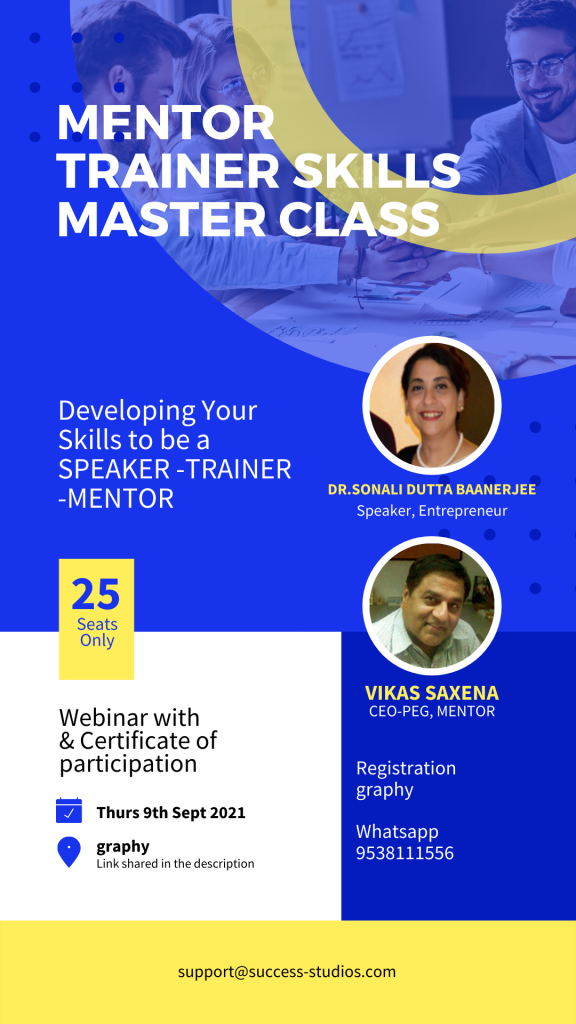
Learn to design your perfect course -workshop and talk! Mesmerise your audience -participants and team members with a PROMISING -PRECISE -PERFECT talk that communicates not only your message but translates into effective skill with immediate effect.
In just 90 minutes you will:
-Learn about CONTENT DESIGN Methodology
-Audience Management skills
-Creating Your Profile and Presence in the professional world
-Create Templates for trainings -talks and mentoring sessions
-Live Q&A to answer your questions
The best trainings are a result of a trainer spending hours on research, design and practice. Keeping information fresh and reinforcing new learning is a constant challenge for trainers. In fact master trainers are also individuals who can support your mentorship and facilitation skills as a public speaker. This program helps the target audience surmount the challenge and create a formula for successful training programs. As a professional a trainer’s prime responsibility is to empower and enable his participants master a behavioral or a technical competence. Skill and will building is an objective of any successful talk -training or mentorship program.
Sounds exciting? Click on the poster below to start your journey and also get a free book on Mentor-Trainer’s Toolkit that would help you master your game.Additional Bonus of co-facilitation with our Master Trainers.






 drsonaliduttabaanerjee