SUSPENDING JUDGEMENT| FUNDAMENTAL ATTRIBUTE OF A COACH|

SUSPENDING JUDGEMENT TO ENCOURAGE CURIOSITY

Every day in our life our judgment precedes our ability to empathize. We alienate ourselves from people as soon as we start judging. This most often creates a vicious cycle. To be able to leverage the best from others the fundamental law is to Suspend Judgement. This is especially true for coaches and leaders, as they are intensely involved in people’s practice.

Whilst facilitating a recent coaching workshop one of the core topics addressed was suspending our judgment. As we discussed the topic, at first there was some hesitancy about what we meant by it, but eventually settled on the tendency to make judgments about what we are hearing as we hear it. Our belief system is a byproduct of our information and treatment over our lifetime. We pride our abilities to look through a lens that is a gift from our ecosystem, and not necessarily our own. We constantly look at conformity and acceptance, we also apply that in viewing others rather than appreciating how they are different. This has an impact on our communication -perceptions and also our lifestyle.

Critical thinking yields the best results when you approach something with an open mind. … It is also important to suspend judgment when undertaking analysis so that we will not implicitly signal to our audience that our mind is already made up concerning the issue or object at hand.

Curiosity is underplayed if we engage in the practice of judgment. Any dialogue for growth, journey to a solution, or even investigations can be better handled if we suspend judgment. It’s a foundational need for the creative process.

We live in a boxed world where we want to categorize and box everything that we see around us, however, the fact is existence is dynamic and can never be declared with a single facet there is more to everything that exists around us.

As a leader and coach inculcating a habit of active listening is less prioritized. In communication, we often prioritize speaking rather than listening as we want to prove worth with our words! However Active listening means suspending that judgment until you are sure that you have understood exactly what someone is saying, through questioning, probing, checking, and summarising – it requires an open mind. As a listener and a leader, we should be open to new ideas, new perspectives, and new possibilities. Even when good listeners have strong views, they should suspend judgment, hold back on any criticisms, and be curious to know more.

6 Ways to Develop the habit of choosing to suspend judgment, to stay curious, and facilitate an environment of creativity:

  1. Stay Curious with an Inquiry Mindset -Every time you are in a meeting, coaching session, or even in an evaluation process hear out what others are sharing rather than be in a hurry to declare your authority and knowledge in the same.
  2. Empathize with the Situation or the Person -Unless you are the judge in a court, practice empathy above quick slotting into boxes.
  3. Engage in regular workshops to unravel rather than in escalations -During situations of escalation or fire fighting we don’t have the luxury of long dialogues of transformation; thus practice of suspending judgment needs to be developed in a more peaceful environment of training and preparation.
  4. Learning is the only constant -Too many adults lose their childlike curiosity to learn everything around them. With our obsessive involvements in work, family, sports, video games, and other commitments we un-learn our natural inclination to learn, which makes us worse at having conversations with folks who see the world differently. Learning is not static and location-specific every moment we have the potential to engage in learning. People with a strong ability to learn are not only great at dialogue, but they are also going to relevant community leaders.
  5. Meaningful Dialogue -Meaningful dialogue is an elusive thing in our communities. Often our living room conversations of improving our politicians and country have no outcomes as we don’t play a role in the same. Dialogue has great potential, thus prioritizing ones where you could create an impact can be the first step towards legacy.
  6. Respecting others’POV -Most often we are too attached to our own POV, so much so that we invade others’ right to have their own. Imposing our views as the best rather than investing time in understanding others is something less prioritized.

How often are you practicing ‘Suspension of Judgement? Can think of any instance where you have lost an opportunity or an advantage because of your judgment of others? Do share with us your thoughts and how you feel when you try suspending judgment.

Learn More about Suspending Judgement from following research papers:
http://www.cct.umb.edu/susjudgement.html

file:///Users/apple/Downloads/Paper6SuspicionandTrust.pdf

6 WAYS TO ADDRESS BURNOUT| WORK-LIFE BALANCE

Burnt Out: What To Do When You've Had Enough
BALANCING WORKLIFE TO AVOID BURNOUT

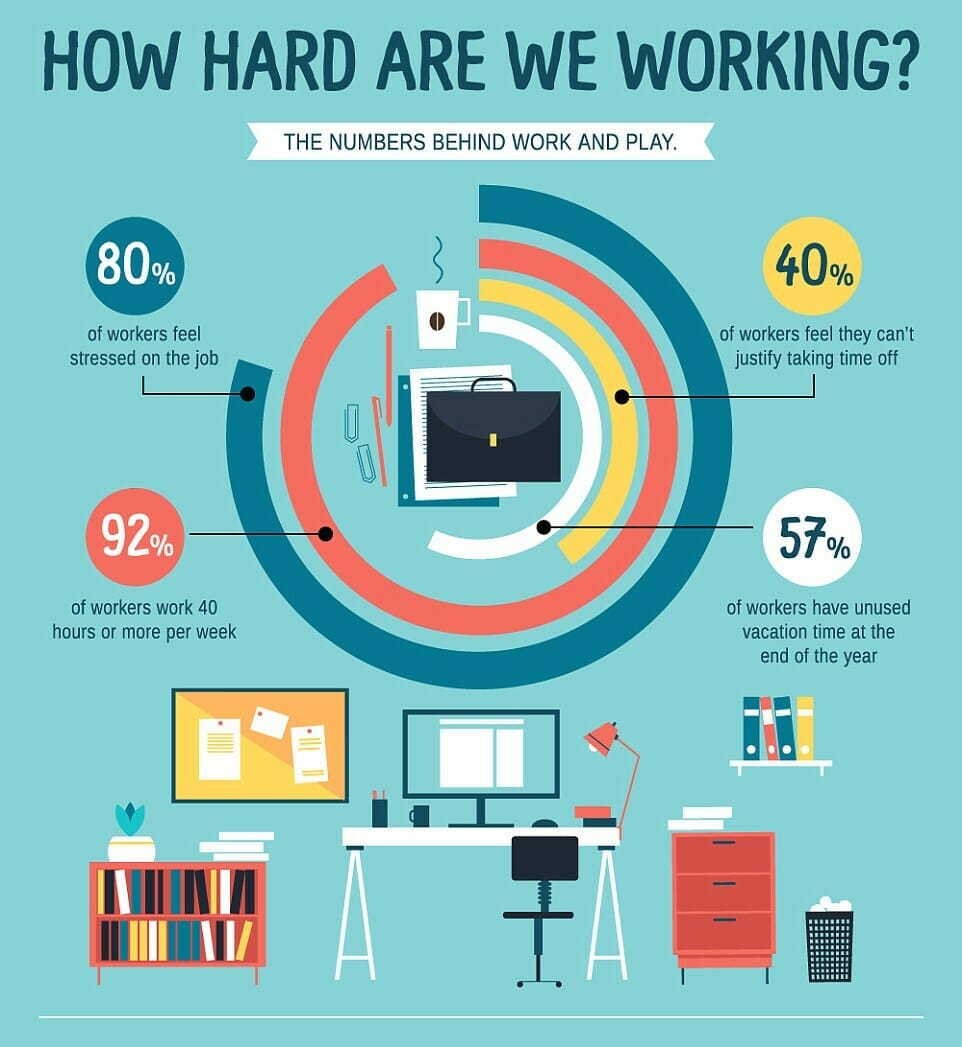
Burnout is a psychological syndrome emerging as a prolonged response to chronic interpersonal stressors on the job. The three key dimensions of this response are overwhelming exhaustion, feelings of cynicism and detachment from the job, and a sense of ineffectiveness and lack of accomplishment. Researchers from the Social and Psychological domain view interpersonal relations, emotional dilemmas towards performance & productivity, etc. as the primary cause of burnout. However Industrial and organizational psychology also viewed the organizational culture and ecosystem to be responsible for stress experience.

Although the WHO is now working on guidelines to help organizations with prevention strategies, most still have no idea what to do about burnout. Since it has negative impact on employee well-being and has massive associated costs, the organisation needs to plan interventions to avoid it.

Research reveals, worldwide, 615 million suffer from depression and anxiety and, according to a recent WHO study, which costs the global workforce an estimated $1 trillion in lost productivity each year. Passion-driven and caregiving roles such as doctors and nurses are some of the most common victims of burnout; consequences could be life-threatening especially for men.

Performance anxiety and the need to prove one’s worth pushes people to take on more than they can chew and eventually sabotage their health and overall wellbeing. As a leader in a fast-paced environment, it’s critical to recognize the signs and cultivate employee welfare and balance to avoid loss of intellectual wealth.

Doing more with less has been the need of the hour for many decades, however, to manage profitability and pandemic a lot of organizations are restructuring with more and more individuals under the pressure of handling way more than they did earlier. In this hour of crisis, one needs to watch out for signs of burnout before it adversely impacts health. WHO is developing and testing IT-supported self-help tools to address common mental disorders, psychological distress in low-and middle-income countries.

Signs of burnout could be irritation, cynicism, constant fear of failures, lack of self-care, lack of immunity, insomnia, anger, negative outbursts with others, fatigue, lack of focus, etc. As burnout creeps in, the physical and emotional health declines.

6 Ways to address burnout and maintain work-life balance –

  1. Designing work to be Fun -Enjoying what you do is a sure way to beat stress. Now, this doesn’t happen by chance. One needs to consciously design a few aspects of work to be fun. This could be Socratic discussions -changing locations -humor in conversations and above all able to laugh out. Innovating your workspace to be interesting and fun is something that can bring down stress levels to great extent.
  2. Setting Reasonable Goals -Sometimes when too much in too little time and over-ambitious goals could be a sure way to bring oneself down. Thus more than SMART goals, one can set meaningful goals with long-term alignment.
  3. Free flow Conversation Out of work/Socialise -Another way to relieve a little pressure is to share your problems, thoughts, and concerns with someone who genuinely cares about your well-being. It could be a spouse, your best friend, a neighbor, or a trusted co-worker, mentor, yet out of work to avoid any complication at work.
  4. Vacation -A complete and total cut-off from work, in a vacation can clear mind and rejuvenate for refreshed energy. Ideally, you should be gone for at least two weeks with zero office contact. Don’t make yourself available for calls. Don’t check your emails. If at all possible, go somewhere that is the complete opposite of work and do whatever makes you genuinely happy. If that’s climbing mountains, white water rafting, or whatever brings you out of the burnout.
  5. Setting Boundaries -Setting boundaries also means not overextending yourself. Don’t be afraid to turn down an invitation on the weekend if your schedule is already full and you need extra time to recharge. Saying no can help when it comes to coping with burnout.
  6. Therapy -Based on severity one can even seek the professional help of therapy and counseling. Today they are more acceptable interventions and devoid of social taboo which was associated with them in earlier times due to lack of awareness.

Dr. Chengappa, MD, and general practitioner advises self-awareness and regular health check-ins to avoid burnout situations. Now that the WHO has put out a clear definition of burnout and acknowledged it as a legitimate threat, organizations can focus on the measurement, programming, and support tools. Balance is of utmost importance rather than monotony or over motivation. Leaders, coaches, and others supporting the workforce need to be more cognizant of these factors.

What are your ways to beat stress? Do you have energy vampires in your life? How do you deal with deadline stress? How’s your delegation and planning working? Are you working weekends? Do share with us your strategies to avoid burnout.

A TRIBUTE TO A GREAT MEDICAL PROFESSIONAL| NATURAL HEALING|

DR. SATYA VAMSI KRISHNA -UPPER LIMBS SPECIALIST INSPIRES EXCELLENCE

Almost a few months back, I accidentally injured my little finger and I realized the value of a genuine medical professional. After the injury when I reached a nearby hospital they gave me a painkiller and cleaned the wound, stating they didn’t have a doctor available in the morning hours to stitch my wound. Post which I was rushed to the emergency of a renowned hospital in the city where I was subjected to an endless wait. A wound that should have been ideally stitched at the right time was then sent to the cosmetic surgeons who wanted to take me to the operation theatre-ask for my insurance details to admit me. After almost 9hours, when I insisted that the wound be stitched, it was done with a massive plaster, etc. and I was asked to come after 3 weeks. When I did so after 3 weeks the same doctors thought that they have to do a cross-finger surgery because the finger wound looks bad. I was devastated as this meant going through surgery and also delaying my day-to-day work.

This is when we were advised by a family friend and a medical professional,(Dr.Amit Dutta) to see Dr. Satya Vamsi Krishna -a specialist in upper limb surgery. Wondering what his diagnosis would be I called him and to my surprise, he answered the phone and asked me to send photos of my injury. From the onset, he came across very confident in his analysis of my situation. Since I was advised to go for surgery immediately, I was in urgency to see him. However, he asked me to meet him in the afternoon and confidently assured me that there was no urgency.

That afternoon after seeing my hand he said the situation can be salvaged with regular dressings, over some time. So if I am patient about the natural healing process, I can relax, while I resume my work, as using the finger would facilitate faster recovery. The only care to be taken was regular dressing and no water touching the wound till it heals. This was like all my prayers had been blessed!! His approach -assurance, and confidence in healing me, relieved me of all my apprehensions. Subsequently, after weekly dressings and check-ins for almost 2 months my finger now is normal. Dr. Krishna took great care while I was in this phase and his calm-confident-caring composure is something rarely found in the medical industry. As a surgeon one’s natural tendency is to put people under the knife, however in this case Dr. Krishna’s avoidance of the same, if natural healing is possible is something that can be better emulated in the healthcare industry.

National doctor's day 2017: 10 Best Messages, Sayings To Thank Your  Favorite Physicians
DR.BC ROY THE PERFECT ROLE MODEL TO ALL PROFESSIONALS

Today medical science has evolved with the smartest technologies, treatments, interventions, and insurance to experience the same. However, lesser the interventions better the professional. India has had a legacy of great doctors like Dr. Bidhan Chandra Roy, who could see a patient and diagnose issues. Bidhan Chandra Roy MRCPFRCS (1 July 1882 – 1 July 1962) was an Indian physician, educationist, philanthropistfreedom fighter, and statesman often considered the maker of modern West Bengal. Professionals like Dr. Krishna remind me of Dr. BC Roy’s stories that we used to marvel at in our childhood. Privileged to have experienced someone like Dr. Roy in our generation. Hope we have more medical professionals of our times follow in the same footsteps. 

Dr. Sathya Vamsi Krishna completed MBBS and MS- orthopedics from Rajiv Gandhi University of health sciences, Bangalore. He was awarded Gold medals by the university for his academic performance in orthopedics. Immediately, after post-graduation, he pursued various fellowships from renowned institutes nationally and internationally. He completed his 1 year long Dr. Paul Brand Fellowship in Hand and Microvascular surgery at Christian Medical College, Vellore, and proceeded for another fellowship from Ganga Hospital, Coimbatore. During this training, he was exposed to all aspects of hand and upper limb surgery. He returned to Bangalore and worked as a Hand Surgeon in Dept. Of Orthopaedics, St.John’s Medical college for 18 months. Further, he moved to Singapore for another year to pursue Fellowship training in Hand and reconstructive microsurgery from National University Hospital, Singapore. He has numerous publications to his credit and has presented papers at national and international conferences. (For more on Dr. Krishna please visit -www.upperlimb.in)

An unparalleled professional in his field, Dr.Satya Vamsi Krishna truly does justice to every case that he handles. His passion is visible in the way he handles every case, very meticulous about every aspect, yet not endorsing anything not required for the patient. In a world where everyone is busy minting, he is a masterful artist who engages with a passion to cure with minimalistic interventions. I am truly blessed to have found someone like him.

Do share with us your stories of meeting great professionals in any industry. We would be delighted to share such great role models with our community of practitioners -leaders -specialists and coaches.

SYMBOLISM OF SARASWATI IN KNOWLEDGE ECONOMY|

Maa Saraswati – The Goddess of Knowledge | RitiRiwaz
Qualities to Imbibe from goddess Saraswati

In the knowledge economy goddess, Saraswati is our guiding force. Every single day things are changing, the only way to cope with this is to be a voracious learner with an appetite for any challenging change brought to us. Our wellbeing, wealth, work-life are all dictated by our updated knowledge.

In India, every god represents qualities and traits that we want to bring into ourselves and our life for larger success -satisfaction and a soulful life journey. Saraswati symbolizes our need and nurturing of wisdom, which is the GPS to our life purpose.

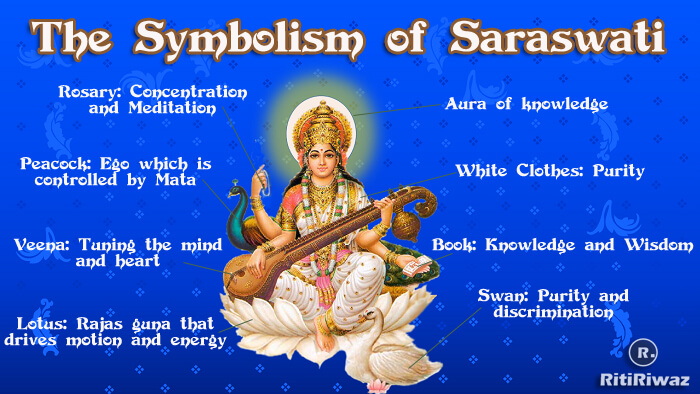
Today every profession demands continuous learning -relearning and unlearning to stay relevant. Thus goddess Saraswati commands our destiny in the knowledge economy. She symbolizes aura of knowledge through her presence, purity through her white attire, wisdom with the books she holds, pure judgment through the swan, her lotus represents energy, veena representing tuning of the head-heart -hands, the peacock is a representation of ego control and rosary the symbol of being in a meditative mode.

In the knowledge economy, knowledge is the first step to performance -potential and productivity. Prayers help us focus our inner being to cultivate the traits -habits-qualities of eternal learning mind. No matter what profession our society today has become very learning savvy. While Google is our universal academy for research and soaking ourselves into knowledge pertinent to our domain, WhatsApp facilitates social learning & leverage. The boom in edutech companies is a testimony to the need to learn on the go. This intuitive -AI-driven world has made us conscious of how we can find our passion, alignment, and satisfaction as knowledge seekers!!

Saraswati Puja is performed to seek the blessings of Goddess Saraswati. She is believed to be the consort of Lord Brahma, who created the Universe with her knowledge. She sits on a swan and has a peacock on her side. She holds a Veena in her hands. The puja is performed with friends and family by placing an idol or a photo of Goddess Saraswati in your Puja room ideally in the east direction. And keeping all our important books next to her, lighting a Diya and offering sweets-flowers and fruits. Mantras of Goddess Saraswati are recited before the idol or photo of Goddess and Arati is performed with dedication and devotion. Students usually pray for success in exams and ultimately in life while professionals seek excellence, capability to address change, continuous learning and progress in life.

Food prepared during this day includes kheer (rice cooked in milk and sugar), curd rice, sugar cane, sugar candy, and gingelly balls along with parched rice and paddy are offered to Goddess and then eaten by all the members of the family as Prasad. Many people feed poor Brahmins, give books to poor students, feed them and provide them things needed for health and knowledge. People pray to holy Gods and Gurus for spiritual knowledge. You can also donate money or books to educational institutes, orphanages, and spiritual institutes.

The origin of the Goddess has many stories attached to it. Some say she came out of the mouth of Lord Brahma while some say that she came out of the Samudra Manthan. It does not matter what the story of origin is, the festival is celebrated with great fervor and gaiety in Bengal. Kite festival is associated with Vasant Panchami and people spend the day flying kites and socializing as well. Praying to Goddess Saraswati is said to reward a person with success and peace in life.

Wish you a very happy Basant Panchami!! May your wealth of knowledge grow by the days!

PEER LEARNING EMANCIPATION| SPREAD YOUR WINGS|

Peer To Peer Learning In Schools With MSC - Stem Learning
SPREAD YOUR WINGS WITH PEER TO PEER LEARNING!

Sometimes, when I rewind my life on the time machine, life’s exciting moments and learnings seem to flash in. Still remember the juggling of sports and study responsibilities in school, when my friends used to be my biggest saviors. Getting up on stage and sharing my laurels and trophies from my sports career as a child had a huge advantage, some of the most meritorious were always there for me. The self-esteem-confidence and feeling good about life was all to do with sports, from where I got my best lessons of learning from peers, being agile, falling to rise, enjoying one game at a time, leveraging on the best of self and others. As a state player while I aspired to play for the country, residing in my dreams learning one stroke at a time seemed like the best joy ever. My school friends were my best teachers, discussing lessons explaining my perspectives gave me a huge high, as I had to skip classes to make it to my tournaments. A greater sense of mastery was nurtured while fearlessly explaining my version of understanding to my friends. A fan club of admiration for each other’s talents was devoid of the teacher’s judgment of scores, intelligence, or aptitude.

Between school and college I got married, (inspired by my sisters who were a decade ahead of me in age, yet their familial independence and decision making -joys of having a dedicated partner nudged me to take the plunge) and I continued an estranged journey of learning!! However soon I got my motivation back with my peers who rescued me from losing my desire of making learning a fun journey and investing myself into a lifelong engagement rather than moving away from it. Discussing Shakespeare, DH Lawrence, Elliot with versatile minds and soaking our minds into characters that came to life and taught us about life, genres, seductions of victories, the lure of ambitions, ambiguity in failures. Networking with seniors -juniors, juggling married life, college team sports, peer learning, and internship in my friend’s NIIT franchise was a combination of life lessons and real-world aura that brought in a rainbow flavor to my entire experience. This time my college mates were my best professors. More than grades what excited me was long hours of discussions, debates, and growing together.

This function of peer-to-peer learning got best accentuated in my work-life. Whether it’s teaching-mentoring -coaching -leadership -consulting or management peer to peer learning is the foundation of excellence. Exchanging notes with peers, sharing your POVs without judgemental biases, and emulating the best practices are the ways to collaborative excellence. Sure our dashboards were a point of competition sometimes(same score syndrome introduced in our childhood) however soon you realize no glory matches when it comes to Peer support and collaboration. In fact, competing for the same result( of getting the same position or appraisal rating) is soon redundant as one needs to rise above the competition to master the art of teamwork, knowledge management, and collaborative camaraderie. As its not your supervisor’s assessment or appraisal that will shine you in times to come but how you look and assess yourself every day, in terms of your handling every relationship -result or reward. Being a good Samaritan has no rewards from your immediate environment, yet it’s your final self-appraisal report that gives you a high in life. Doing things for favors -returns -rewards are business transactions, however, peer-to-peer learning -inspiration and motivation -support is something that outlives performance.

I am sure we all have a greater sense of mastery over a certain skill after explaining our thinking behind it to a peer. We learn a great deal by explaining our ideas, experiences, and thought processes to others. As a leader, learning from other leaders provides an invaluable path to growth. When I look back at my learning journey, I feel I learned best from my peers whether in school -college or running a family, and of course at work. Every tacit know-how can only be cracked through peer exchange. One of the best schools I have ever been to, which strongly promoted this was I-COACH Academy Australia. Coaching skill mastery is possible only when you practice -analyze and hone every day with your fellow peers. The same is true for any profession.

Especially during this virtual world operation, peer-to-peer learning is an indispensable pillar that can support you to manage teams, stakeholders or even navigate tough emotions at work. It not only facilitates learning but provides a much needed community. 

Today Peer to peer learning method is backed by researches from NTL (National Training Laboratories Institute for Applied Behavioral Science) and is popularized by the Graduate School of Business at Stanford University. This is also called a ‘T’ Group. In a T-Group, a small group of people who do not know each other and are unlikely to work together in the future, but who are in a similar situation to each other meet with two experienced facilitators to learn from their interactions with one another. I believe most group workshops -training -teaching can emulate similar tools for great results in learning and knowledge transfer.

While there is value to be found in all types of learning, the particular value of peer-to-peer learning is building relationships and community. The new normal environment is novel, and will teach all of us different lessons about what it means to lead-coach-manage outcomes. By sharing those lessons with peers we know that we are not alone. In peer-to-peer learning, your peers become your sounding board, your confidants, and your teachers. In return, creating a mutual growth promise.

Do you think you are still learning? What are your best methods of mastering your craft? How do you want to keep yourself relevant in this dynamic world? Who is your board of advisors in life and career? Are you sharing notes with your peers? We would love to hear more from you and the challenges you would like us to address. Cheers!

EMOTIONS CAN RUIN SANITY| EMOTIONAL HEALTH|

NO MATTER THE SITUATION, NEVER LET YOUR EMOTIONS OVERPOWER YOUR INTELLIGENCE  - America's best pics and videos
MANAGE YOUR EMOTIONS TO DEAL BETTER WITH LIFE

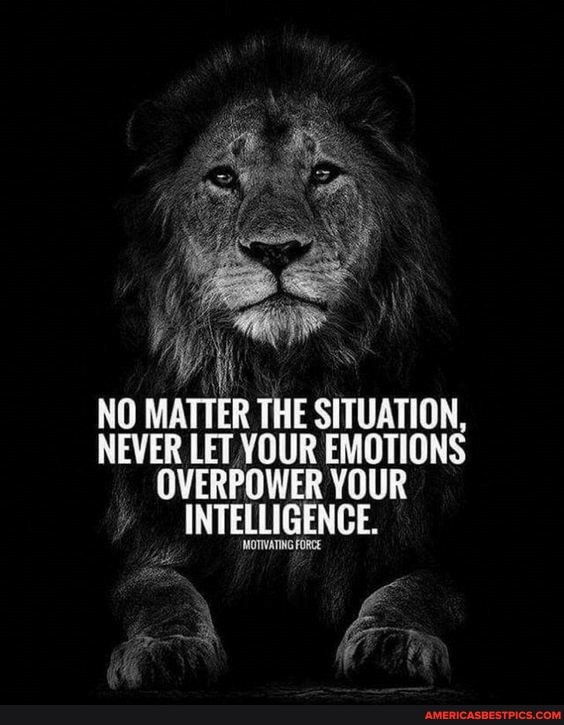
Life today plays havoc with our emotions every day. The trigger could be anyone or anything, this stimulus-response should have been an old stone age thing!!! However, most often we are victims of our emotions, though we might be blaming others. I jump to ridiculous conclusions when I’m emotional, and I’m like anyone else in that sometimes they get the best of me. And it’s pretty embarrassing in those moments, especially if I’ve been stupid enough to make any kind of decision.

Today, every marketing -advertising company is leveraging this to sell their products and services to us. Most of our decision-making happens in the amygdala where our emotions can play havoc. While sensitivity and emotions are good to have, over dramatizing it for positive or negative can cost us our balance in harmony -health and happiness. Our entire life worthiness is determined by how we performed -offices we held -how we are perceived etc…To an extent that the scorecard for worthiness is given to external forces to assess. Sometimes evaluations are our perspectives and guesswork of what the final report looks like rather than an actual one…

Recently during a conversation with my friend, I found that we over-romanticize work-life and our expectations from the same. We don’t complain when every day in our life we need to deal with chores which don’t seem pleasant and fancy, like changing diapers-taking care of pet poops, putting the garbage out, dealing with some everyday critical comments from loved ones…yet when it comes to workspace even a conversation with an irate customer or someone’s upfront criticism can be demoralizing.

Sometimes having the awareness to recognize our judgment is clouded by emotion is next to impossible. Many of us don’t know how to read the signals. Hence why we get swept away by our caveman instincts.

Harvard Medical School On Stress As an Emotional Response: When someone experiences a stressful event, the amygdala, an area of the brain that contributes to emotional processing, sends a distress signal to the hypothalamus. This area of the brain functions like a command center, communicating with the rest of the body through the nervous system so that the person has the energy to fight or flee.

Every other human walking this earth falls into this trap. Sometimes being aware is all it takes to control. Though we call ourselves superior beings, we often make horrible decisions when solely guided by emotions. It’s like having horse blinders on. Our focus only becomes what is directly in front of us and is filtered through the emotion, blind to all the other inputs. Interestingly whether it’s investing in stockmarkets -business -real estate or buying anything we are mostly driven by our emotions rather than our intelligence.

So much so that when trading schools teach, the first thing that they underline is how to deal with your emotions when you are upstream or downstream with your investments.

9 Ways to take charge of your emotions -decision-making and wellbeing –

  1. Disengage -Every time you get into an exaggerated emotion, disengage. The gap between stimulus and response is what drives your sanity. Think about the last time you made a poor decision. What emotions were flowing through you? In personal and professional life, this could be very effective to save relationships -business transactions and any situation which involves you to make decisions. I still remember one of my colleagues with an army background once told, ‘count 100 or even 1000’ to leverage logic. Take permission to leave and deal with it when you are calm and willing to look at all inputs.
  2. Analyze Triggers – Sometimes we are so busy in life that we are not aware of our environment or even ourselves. We plunge into the same mistake repeatedly due to lack of observance and analysis, which can sure save you from future instances. Watch out when you are too consumed in an activity, that you miss out on obvious triggers, that have impacted you in the past. Understanding yourself, your preferences, and what disrupts your life, is critical to solving this emotional mystery!!
  3. Avoid Hunger -Anger-Pain-Tiredness -The moment you notice hunger -anger -pain or tiredness it’s time for rest and rejuvenation before you can get back into action. Decision-making needs a crystal clear mind. Several years back, when my friend was jet-lagged he drove and was lucky to save himself from a major accident. Any activity that needs quick reflexes -decision-making needs you in a calm state of logic. While the gut decision-making and emotional response are taken into stride, it shouldn’t be overpowering the reasoning capabilities.
  4. Express your feelings in appropriate ways-Let people close to you know when something is bothering you. Keeping feelings of sadness or anger inside adds to stress. It can cause problems in your relationships and at work.
  5. Connect with others -Make a lunch date, join a group, and say hi to strangers. We need positive connections with other people. Social interactions can be a great way to rejuvenate. Focus on the good things in your life. Forgive yourself for making mistakes and forgive others. Spend time with healthy, positive people.
  6. Find purpose and meaning -Identifying what gifts you have and channelizing them towards meaningful work can be a great way to engage your emotions positively. This could be your work, your family, volunteering, caregiving, or something else. Spend your time doing what feels meaningful to you.
  7. Take care of your physical health– Exercise regularly, eat healthy meals and get enough sleep. Popping too many pills or even relying too much on entertaining drinks could also be adverse. Keep your physical health from affecting your emotional health.
  8. Manage stress– Learn relaxation methods to cope with stress. These could include deep breathing, meditation, and exercise.
  9. Strive for balance -Find a healthy balance between work and play, and between activity and rest. Make time for things you enjoy. Focus on positive things in your life.

Emotional health is an important part of overall health. Emotionally healthy people are in control of their thoughts, feelings, and behaviors. They’re able to cope with life’s challenges. They can keep problems in perspective and bounce back from setbacks. They feel good about themselves and others in their environment. Being emotionally healthy doesn’t mean you’re happy all the time. It means you’re aware of your emotions. You can deal with them, whether they’re positive or negative. Emotionally healthy people still feel stress, anger, and sadness. But they know how to manage their negative feelings. They can tell when a problem is more than they can handle on their own. They also know when to have interventions.

How well do you understand your emotions? What do you do when you are in a stressful situation? What are your triggers? What drives you in life? How do you want to contribute? What gives meaning to you in life? Do share with us your thoughts and how you engage with emotions.

6 WAYS TO MAKE WORK FROM HOME PRODUCTIVE| WFH NORMS|

IT companies seek regulatory changes to make WFH a permanent norm | TechGig
WFH NORMS

During pandemic transitions into the new normal working from home has become a mandatory method of operations. It has a lot of benefits and today almost half of global businesses offer some sort of work-from-home option. Many employees appreciate the flexibility and comfort that remote work provides. But adjusting to working from home if you’re used to being in an office environment isn’t always a cakewalk. Feeling disconnected from their coworkers, some people struggle to maintain their usual productivity level and also maintain communication channels with stakeholders. 

Best benefits of WFH

  1. Flexible Schedule– One huge benefit of working from home is that your schedule can be a little more flexible. Want to meet up with a friend during your lunch hour? Need a walk around the block to clear your head? Want to sneak in a workout during the time you would have been commuting? In most cases, you’re free to go for it! The flexibility of working from home especially appeals to people who have children (or even just pets, or senior citizen to take care). If you’re needed for anything, you’re already there.
  2. Financial Benefits -Working from home can save you a lot of money. Think about all the small expenses you incur on a daily basis when going into the office. Gas for your car, public transportation, parking, tolls, lunch, coffee, and more all add up big-time. Add in childcare and business clothes and the cost rises even higher. 
  3. Higher Productivity -When you work remotely, you can create your ideal work environment. At home, you control the room temperature, noise level, and lighting situation — you won’t have to deal with the distractions of a typical office. The freedom to make these small choices will make a big difference in the quality and quantity of work you can get done. Your productivity may even extend past office work.

6 Ways to make work from home super productive for yourself:

Adjusting to working from home can be difficult if you’re accustomed to being in the office. Here are a few proven ways for success and ease.

  1. Daily Workday Schedule -Sticking to a daily schedule is an essential step to succeed while working from home. Working as per your Outlook or Google calendar can make things easier. You could also use a Pomodoro tool. Blocking out time for every activity and meeting makes it a priority. Whether you need to work in shifts due to office requirements or a 9-5 schedule adhere to the same on regular basis. Taking breaks along with this is also necessary to avoid any monotony or burnout. You could take a walk-do yoga, have a chat, or timeout for meals preparation. Also understanding what is the most productive time in your day can also help you. 
  2. Dress code for activities -Being in the work mode starts with how you dress for the day. Putting on nice clothes just to sit on your couch might feel like a waste of time, but in reality, getting dressed in work clothes puts you in the right mindset to be productive. Whether you wear business casual clothes or putting on jeans and a nice shirt that’s not a T-shirt is more helpful than staying in your bedtime attire. In addition, getting ready in the morning like you normally would ensure that you are ready to hop on a video chat or take a last-minute meeting at any time. 
  3. Create A Designated Work Area– Setting aside a specific place to do your work each day will help you be more productive. This also helps you set physical boundaries, communicating to your spouse, children, or roommate that you aren’t available when you’re working. And when you’re done working at the end of the day, you can leave the room and shut the door — leaving any work stress at the office. How can you set up the perfect space? Find a desk and a comfortable chair. Then make space for everything you need — whether that’s a printer, headphones, or some things you want, too (think a family photo, scented candle, or colorful stress ball). This can help you create an area that’s both functional and fun — somewhere that you look forward to going to each morning.
  4. Minimize Interruptions & Stop Multitasking -Working remotely comes with a unique set of potential distractions and interruptions. Whether it’s your child calling your name, the mailman ringing the doorbell, or your phone chiming with a text, it’s all too easy to give in to these interruptions instead of focusing on the task at hand. Minimize these disruptions by silencing your phone, getting some noise-canceling headphones, and keeping your kids and/or pets busy with a new game or toy. This is also where it comes in handy to have a designated workspace. Completing one activity at the time not only increases focus it also allows you to complete things in order. Multitasking is a tempting option. It becomes even more appealing when you’re working from home. Simultaneously sitting in on a conference call, folding laundry, and mentally starting your next project might make you feel productive. But actually, it’s just the opposite: Multitasking as per research reduces 40% of your productivity and is injurious to the brain. 
  5. Avoid Procrastination -You might be tempted to put off your hardest piece of work until the end of the day or even the day it’s due. At that rate, you’ll just procrastinate — and when you do finally get it done, the job won’t reflect your best work. What’s more, if you complete the hardest job first, you’ll feel more confident in your abilities.
  6. Communication For WFH-Communication with your coworkers becomes a lot more difficult when you aren’t physically side-by-side. But although it’s difficult, it becomes more important, too. You can always share your work hours with your associates for convenience or set up a calendar, have daily check-ins with project leads or team members through the office communicators, optimal use of the video chats, etc. Keeping communication channels open is the fundamental need of productivity in modern times. Also, several tools are now available to make this journey more impactful for yourself and others. (Asan, Zoom, MS Teams, Toggl, Hubstaff, Google workspace, Freedom etc. (Watch out for our next post on this one.)

How are you making WFH useful? How connected are you with your network? Are you getting sucked into other activities? Are you also aligned to your teams and company vision while doing your work? Are you getting siloed due to WFH? Do share with us your perspectives of this new normal?

ACCOUNTABILITY IN LEADERSHIP| ACCOUNTABILITY QUOTIENT|

Satish Dhavan - APJ Abdul Kalam - 1 - Stories for the Youth!
APJ With Satish Dhawan

A story our late President and missile man Dr. APJ Abdul Kalam was particularly fond of related to the launch of a satellite by the Indian Space Research Organisation in July 1979. Kalam was in charge of the project at ISRO and when some members expressed reservations about its readiness, he overruled them and ordered it to go ahead. The launch failed; instead of going into space, the satellite plunged into the Bay of Bengal. As a team leader, Kalam was humiliated by the failure and terrified by the prospect of announcing it before the press. He was saved from embarrassment by the chairman of ISRO, Satish Dhawan, who went himself before the television cameras to say that despite this failure he reposed complete faith in the abilities of his team and was confident that their next attempt would succeed.

The following August, Kalam and his team tried once more to launch a satellite into space. This time they succeeded. Dhawan congratulated the team while asking Kalam to address the press conference. In telling the story in later years, during and after his term as president of India, Kalam would emotionally recall: “When the failure occurred, the leader owned it up. When the success came, he gave the credit to his team.” 

Satish Dhawan may not be a popular name however he was surely instrumental in creating leaders like Hon. APJ Abdul Kalam foremost space scientist who gave the same environment of the experiment under his accountability. A man who took care of his team encouraged them to take the risk under his accountability. While holding office he never misused his powers or create personal wealth, but in leading an ethical and iconic leadership chair he built an epitome in leadership for the world of leaders to emulate.

It is easy to subject the team under the scanner and criticize thread bear. A more important trait as a leader is to take accountability when things go wrong to create a safe workspace. Accountability is one of the most important aspects of leadership without which your role is redundant. You need to provide freedom of operation and risk for the most innovative products to be christened.

Let’s understand the behaviors associated with highly accountable people and explain how they lead to increased trust, stronger relationships, and better business outcomes.  

Meaning of Accountability at Workspace

Accountability is accepting responsibility for your actions and being willing to own the outcomes of your choices, decisions, and actions. It may be helpful to share examples of what high and low accountability levels look like in action from a leadership perspective. 

Let’s say the head of your organization made a bad strategic decision. As a result, the entire company is working overtime to put out multiple fires. Instead of brushing everything under the rug or blaming the other executives who were part of the decision-making process, your leader publicly takes ownership of her mistake, explains how she plans to avoid a similar outcome in the future, and thanks to all the employees for their hard work and understanding. This is an example of a highly accountable leader.

Ways to Foster Accountability

Accountability Guideline from the best research –

  1. Giving Support -By providing a fail-safe environment and encouraging experiments is the fundamental step for accountability. Your performance as a leader is not dumbing down the process but also supporting your meritorious hires to bring their genius to work. To thrive in the dynamic world of change, you need to be experiment savvy and not create an edifice of compulsions. Great organizations like Google have established the best supportive environment for employees while they innovate to bring the best to their customers. They have become our survival services rather than luxury needs.
  2. Provide Freedom -Brightest today wants an environment of freedom to learn -execute -engage rather than being puppets. This environment eventually is a win-win for all. While there is a lot to learn from experience, the reverse is also true the young bring fresh ideas-innovative methods, and creative resources which also need to be leveraged.
  3. Share Information -As an accountable leader it’s critical to orient the team and not withhold information that could impact projects -performance-productivity and eventually the growth of the organization. It is easy to reprimand for actions however to correct them on time for transformation is the larger game of an Accountable Leader whose team always wins. As a leader, you are not being compensated to give solutions but bringing in and nurturing the right talent.
  4. Provide Resources -Are you constantly trying to be cheaper-better -faster…as the best projects sometimes need optimal resources to be successful. Some recipes do need butter-ghee for the outcomes!!! True simplification is being smart, however, for your innovation, you need to have the right budgets rather than compromise.
  5. Be Clear -Clarity in vision and goals is the foundation of any accomplishment. The ways to your destination can be many however destination needs to be determined for your team to be on track.

Accountability leads to great leadership and successful management by building trust, strengthening relationships, and keeping costs under control. This muscle sure can be built by inspiration, mentoring, and coaching. Mentors and coaches can support many aspects of accountability – from improving leaders’ abilities to follow through on actions and taking ownership fearlessly.  

Your Accountability Quotient -Score yourself a 1-5 based on how often you are doing the following actions at work. (1 being least and 5 being highest. Higher the score better is your AQ)

  1. Always encourage my team to experiment in their innovation journey.
  2. Hire-train right and then allow freedom without the fear of failure.
  3. Share information with stakeholders without insecurity.
  4. Always work on optimal resources before I launch the projects or promise completion. I also take the team into confidence while doing so.
  5. Prioritize clarity and organize workshops before takeoff on goals and not create an imposition method while running productivity.
  6. While working with the team to objectively unravel reasons for failures, avoid staining them with the malice and bloodshed of failure.
  7. Objectively help the team to work on a comeback after a letdown and not glorify my pedestal while doing so.
  8. Believe as a team we win rather than wear the crown of accomplishment.
  9. Catch people on time to support their transformative journey rather than engage in grapevine.

What are your thoughts on accountability? Do you think playing scapegoat is a better way rather than ownership and staining yourself? When you complain about others’ mistakes are you able to see yours? How do you think you could get better by practicing accountability? How powerful do you feel when you practice accountability? How was your score? What are the next steps? Love to hear from you and your perspectives on Accountability – a not-so-easy trait to emulate!!

CUSTOMER EXPERIENCE DEMYSTIFIED|6 SURE WAYS TO MANAGE CX|

Customer Experience", Roh "Digital Transformation" Halaman 1 -  Kompasiana.com
CUSTOMER EXPERIENCE QUOTIENT

The biggest rating that matters to any startup or fortune company is Customer Experience. Any domain starting from the service industry, hospitality or healthcare if the customer experience is not doing well then you are dealing with severe dissatisfied customers to handle which snowballs into account issues or even business performance issues. Your client satisfaction survey score or VOC determines what work your several departments should be prioritizing. More customer orientation also ensures brilliant reputation, consistent business, growth, and the best differentiator to beat the competition.

However, sometimes the revenue targets can lead you astray in setting goals that may not be favorable to your clients. Recently when I visited one of the best hospitals in the city, I was shocked at how the patients were being treated and the delayed decision making. The worst was handed out to me when they were making a simple issue into major surgeries and even scary complications. Medical science today is one of the biggest businesses and a scary place to step in…Senior doctors of the hospitals have several foreign qualifications to impress and are well compensated, however, their sad story of thriving in the role depends on how much they can milk the patient. Unfortunately in the name of professionalism customer experience in this domain is slowly becoming a nightmare.

Quick profits and revenue growth has inspired many businesses to cut corners, compromise quality, beat the competition, and become obsessed about success defined in terms of revenue alone…and eventually drown customer experience. Today Customer experience is more mechanical and sometimes a manipulated score.

It is god’s grace that even in this age of cutthroat competition, some true professionals and ethical organizations are giving their best to their clients, and delighting them in every field. Hopefully, they would soon outnumber and outshine the ones who are not focused on the customer’s wellbeing. A big digital marketing budget is not driving them, what drives them is every single user experience irrespective of how much it fuels the business. It is time such saviour knights in organizations are rewarded in the boardrooms and are role models for others in the same domain.

There are many benefits of customer experience management, such as increased loyalty & engagement and positive word-of-mouth marketing. Work on developing an active customer experience management program in your company to proactively improve the customer experience at every step along the customer journey. You can also use a lifecycle in terms of products -employee CX orientations, used case scenario upgrades, big data analysis, and integrating all your functions to speak the same language to yield on this metric.

6 Ways you can re-visit your Customer Experience norms are:

  1. Know Your Customers -We’ve talked about this countless times – if you don’t know your customers, how will you know what they need, and how your service can support them. Whether in healthcare -tech -hospitality…this area is critical even to understand your relevance and your target audience…rather than implementing a mass strategy. Again this needs to be part of a system to ensure every time you are dealing with a client the most important aspects are documented for you to refer to. Recently in my hospital visit, I was given medication that caused allergies, this again is a lack of information. This ideally should be available if it is my regular healthcare place. Every time I call my premium bank service provider they ask several questions before they provide a solution…apart from authentication can this interaction be better with information already collected. The same applies to the mobile service providers.
  2. Workout your Ideal Customer Experience Strategy -Before creating a customer experience strategy, we talked about what makes a great customer experience. Find out your ideal experience – how you would ideally want the customer to feel when he interacts with your brand. Once you’ve decided on your version of the best customer experience, focus your efforts on delivering your intended experience. This could be your holy grail in how you make the customer feel and perceive you.
  3. Develop a Customer Experience Management Program and use Omnichannel -Customer Experience Management (CEM) is the art of controlling, tracking, and designing customer interactions at all touchpoints to meet or exceed customer demands. Instead of adopting a multi-channel approach, go omnichannel and allow your customers to interact with you and be serviced via any channel. It eliminates disjointed systems and interaction silos between various departments.
  4. Let Your Customers Help Themselves with Self Service -Modern customers don’t want you to help them – ideally, they would want to help themselves. Today, most of the companies offering web or mobile self-service reported an increase in site traffic and reduced phone inquiries. Post resources, books, and FAQs on your website to help customers service themselves and look for solutions to their problems. Because think about it, what would you rather do – wait in line for an agent to answer your query, or browse a forum to look for the answer?
  5. Use Innovation to Raise the Bar & Engage on Social Media-Look at the customer experience of Apple, Disney, and Tesla – what are they doing differently? They use innovation in their approach to customer experience to connect with their customers and stand out from the rest. Innovative solutions are not only authentic and effective, but they are cost-efficient as well. As the next step of innovation using social media to interact with your clients. If they follow you or engage with you, they likely like what you have to offer or what you choose to stand for. Use this to build relationships and build a long-term support plan, rather than bombarding with new schemes every time you get them. Some brands go out of their way to engage their users in amusing ways. NASA’s Curiosity Rover has its social media handle with millions of followers. This could even be an opportunity to reward them with your pilot products or services.
  6. Optimize efficiency with Tech & Focus on Customer-Centric Culture-To truly gain a competitive edge in the world of customer experience, it is important to improve your client interaction performance. Segment your customers with the help of analytics, IVR, and call routing data and focus on overall business KPIs and performance metrics. Empower and invest in your manpower to give them a holistic view of all customer interactions, facilitate smart customer interactions and improve productivity. Don’t strive to create only a single team to manage the customer experience in your organization, strive to make customer experience advocates out of all your employees by CX culture.

What is your Customer Experience Quotient? Are you aware of why they are loyal or not? Do you want to focus on revenue growth or Customer delight growth? Are you worried about your NPS when the survey is rolled out, or is the homework done? What’s your relevance to your customer? Do share with us how work on your CX?

SHAKESPEARE’S PORTRAYAL OF LEADERSHIP LESSONS|

Life of William Shakespeare - Wikipedia
LEADERSHIP LESSONS FROM SHAKESPEAREAN PLAYS

Shakespeare, arguably the most celebrated playwright of all times, has designed some of the best leadership lessons through his characters. He not only captured the spirit of his times, but he also forecasted the future, by depicting the most inherent traits of a leader, follower, and also of people relationships in our society irrespective of geographies, languages, sentiments, or emotions. Some of the Hollywood and Bollywood successful themes are still played around the same Elizabethan playhouse dramas. Presenting blood, bawdiness, passion, treachery, betrayal, and politics echoed down through the centuries. His writing has been translated into 100+ languages, and still shapes the way we think and speak today. Shakespeare’s timeless writing had dealt with the ambiguity by immersing one self into feelings and moral judgment of the audience dissecting the characters for betraying their responsibilities as a leader.

Though not in the ideal sense, we can still derive some leadership lessons from his characters and how they engage with their life situations. Most of the protagonists are lessons for the worst that can happen if one falls from the pedestal of true leadership. The 6 lessons from some of the characters in Shakespearean plays are :

1. Morality is more valued than Ambition – Your growth shouldn’t cost the life and wellbeing of others. Macbeth is a parable on what happens when a man’s ambition outstrips his better instincts. In his soliloquy, the nobleman Macbeth wrestles with his conscience as he ponders whether to kill the king, Duncan and seize the throne for himself. However, the ambition journey cost him his sanity and eventually his life. In the end, Macbeth’s severed head is brought to Malcolm by Macduff, as proof that Macbeth has been overthrown and that Scotland is now Malcolm’s to rule. Thus the evil side is finally vanquished. As leaders, it’s important to understand that ambition is not the be-all and end-all, as the balance sheet of life is larger than just one transaction. There are several unknown events to follow which could be the turn of destiny and the final balancing of the profit & loss account.

2. Sweet-talkers may not actually be sweet – Many leaders enjoy being surrounded by yes clan who would pride themselves on knowing everything at all times. King Lear suffers after allocating his biggest assets to the sweet-talkers who eventually bully him. Cordelia who denies the complimenting spree is ousted. Leaders need the awkward, principled people who will say no – or in this case, nothing – even when it’s in their interests to say yes. Naturally, as King Lear is a tragedy, he discovers the worth of his one good daughter too late. If you want to be wise, watch out before you penalize the black hat guy who is critical of your judgment as the sycophants might backfire.

3. Inaction is Toxic –  Decisions made at the right time can save many opportunities from being lost. A leader who suffers from a dilemma can lead the team astray and eventually sabotage many stakeholders. Hamlet, Prince of Denmark is young, spirited, influential, in love, and yet totally incapable of making a decision. If your client escalation is not solved on time it can impact the client-your team and you… Hamlet likewise suffered indecision while dealing with his hallucinations, the reality of his uncle. His ponderous response to the phantom’s revelation ultimately led to the suspected suicide of his sweetheart Ophelia and a comprehensive bout of untimely deaths at the Danish court. Hamlet had to pay with his life for his inaction and delay in decision-making. Sometimes it is important to take strong decisions, even if you rock the boat.

4. Delivering Impactful Speech– You are as good as your team, however, you need to be prepared with the right address to form the most motivated team who are all focused on a larger vision of togetherness while crossing the finish line. Henry V’s speech before and after the Battle of Agincourt, led terrified troops into battle against the nefarious French. Impacting the team during the hour of crisis towards the immediate goal needs a lion’s heart and courage to get the team as a single entity. Shakespeare immortalized Henry V with his memorable “band of brothers” speech, which is a worthy trait to be emulated as great practice as a leader. Next time you are in a town hall in a situation of panic due to the new contingencies, you need to become the wordsmith with passion & valor.

5. Being Understanding and Merciful – No matter where you are in life, being understanding has undeniable benefits. Time is not always the same and karma truly comes around. in unpredictable ways to haunt you. Whether things are going up or down being sensitive to others is the least we can do as fellow social beings. …. Just because you’re in the right, it doesn’t mean you need to extract your “pound of flesh.” This is just one of the many metaphors that have entered common usage from Shakespeare’s plays; in this case, The Merchant of Venice. Shylock’s character is the brutal revenge orientation that collapses when the wellbeing of all needs to be evaluated.

6. Attention to Gossip could ruin your heavenly abode – While being aware of the grapevine is needed, too much attention to gossip could destroy your flow state in life. Whether it is decisions in difficult times or appraisals that went sour etc. True that an assessment psyche has more the tinge of failure, anxiety, and remorse but does it really need to be so negative… Shakespeare’s Othello is a perfect example of this, who had a dedicated beloved Desdemona; until he started listening to scurrilous gossip-monger. Othello eventually smothers her to death, learns that she was innocent all along, then commits suicide. Before you commit career suicide, watch your actions and your back: check the source and more importantly the motivation behind rumors.

These are a few lessons from the many that are documented and cherished! Which ones do you relate to? What do you think you can practice for honing your skills further? What is your opinion about these characters? What do you think contributes to their outcomes? Do share with us if you can relate to any historical or Shakespearean character who gives lessons we could learn from?