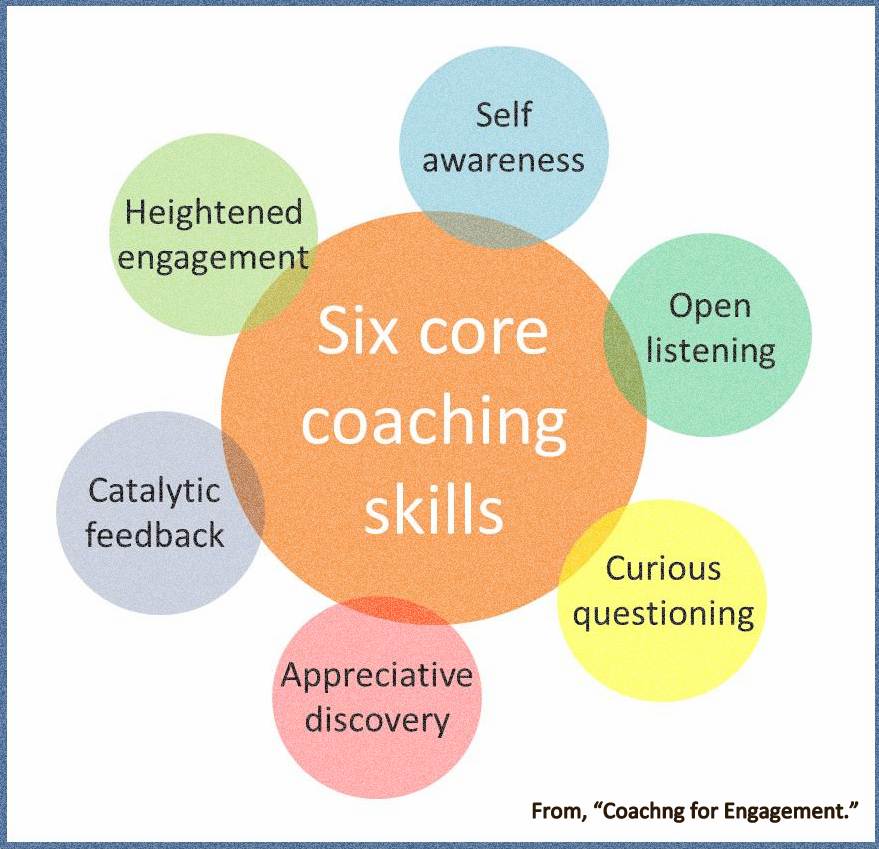
Coaching Skills For Leadership

LEADERSHIP IMPACT

Coaching -Contact Sport

Today Coaching is one of the Fundamental aspects of Leadership. Gone are those days when we used to be dependent on technical – functional and professional domain to become an effective leader. Growth for leaders is dependent on their abilities to leverage the best rather than command people to get things done. In fact even carrot and stick games like Danial Pink opines is losing its value…it all about hiring right and sometimes getting things done out of passion than out of perks.

As a manager, you knew what needed to be done, you taught others how to do it, and you evaluated their performance. Command and control was the name of the game, and your goal was to direct and develop employees who understood how the business worked and were able to reproduce its previous successes.

Rapid, constant, and disruptive change is now the norm, and what succeeded in the past is no longer a guide to what will succeed in the future. Twenty-first-century managers simply don’t (and can’t!) have all the right answers. To cope with this new reality, companies are moving away from traditional command-and-control practices and toward something very different: a model in which managers give support and guidance rather than instructions, and employees learn how to adapt to constantly changing environments in ways that unleash fresh energy, innovation, and commitment.

The role of the manager, in short, is becoming that of a coach.

This is a dramatic and fundamental shift, and we’ve observed it firsthand. Over the past decade, we’ve seen it in our ongoing research on how organizations are transforming themselves for the digital age; we’ve discerned it from what our executive students and coaching clients have told us about the leadership skills they want to cultivate in themselves and throughout their firms; and we’ve noticed that more and more of the companies we work with are investing in training their leaders as coaches. Increasingly, coaching is becoming integral to the fabric of a learning culture—a skill that good managers at all levels need to develop and deploy.

We should note that when we talk about coaching, we mean something broader than just the efforts of consultants who are hired to help executives build their personal and professional skills. That work is important and sometimes vital, but it’s temporary and executed by outsiders. The coaching we’re talking about—the kind that creates a true learning organization—is ongoing and executed by those inside the organization. It’s work that all managers should engage in with all their people all the time, in ways that help define the organization’s culture and advance its mission. An effective manager-as-coach asks questions instead of providing answers, supports employees instead of judging them, and facilitates their development instead of dictating what has to be done.

Companies are moving away from traditional command-and-control practices.

This conception of coaching represents an evolution. Coaching is no longer just a benevolent form of sharing what you know with somebody less experienced or less senior, although that remains a valuable aspect. It’s also a way of asking questions so as to spark insights in the other person. As Sir John Whitmore, a leading figure in the field, defined it, skilled coaching involves “unlocking people’s potential to maximize their own performance.” The best practitioners have mastered both parts of the process—imparting knowledge and helping others discover it themselves—and they can artfully do both in different situations.

It’s one thing to aspire to that kind of coaching, but it’s another to make it happen as an everyday practice throughout the many layers of an organization. At most firms, a big gap still yawns between aspiration and practice—and we’ve written this article to help readers bridge it. We focus first on how to develop coaching as an individual managerial capacity, and then on how to make it an organizational one.

You’re Not as Good as You Think

For leaders who are accustomed to tackling performance problems by telling people what to do, a coaching approach often feels too “soft.” What’s more, it can make them psychologically uncomfortable, because it deprives them of their most familiar management tool: asserting their authority. So they resist coaching—and left to their own devices, they may not even give it a try. “I’m too busy,” they’ll say, or “This isn’t the best use of my time,” or “The people I’m saddled with aren’t coachable.” In Daniel Goleman’s leadership styles, published in this magazine in 2000, leaders ranked coaching as their least-favorite style, saying they simply didn’t have time for the slow and tedious work of teaching people and helping them grow.

The GROW Model

Non-directive One of the best ways to get better at non-directive coaching is to try conversing using the GROW model, devised in the 1980s by Sir John Whitmore and others. GROW involves four action steps, the first letters of which give the model its name. It’s easy to grasp conceptually, but it’s harder to practice than you might imagine, because it requires training yourself to think in new ways about what your role and value are as a leader.

The four action steps are these:

Goal.

When you begin discussing a topic with someone you’re coaching, establish exactly what he wants to accomplish right now. Not what his goals are for the project or his job or his role in the organization, but what he hopes to get out of this particular exchange. People don’t do this organically in most conversations, and they often need help with it. A good way to start is to ask something like “What do you want when you walk out the door that you don’t have now?”

Reality.

With the goal of your conversation established, ask questions rooted in what, when, where, and who, each of which forces people to come down out of the clouds and focus on specific facts. This makes the conversation real and constructive. You’ll notice that we didn’t include why. That’s because asking why demands that people explore reasons and motivations rather than facts. In doing that, it can carry overtones of judgment or trigger attempts at self-justification, both of which can be counterproductive.

During this stage, a good reality-focused question to ask is “What are the key things we need to know?” Attend carefully to how people respond. Are they missing something important? Are they talking about operational issues but forgetting the human side of the equation? Or the reverse? When you ask people to slow down and think in this way, they often lose themselves in contemplation—and then a light comes on, and off they go, engaging with the problem on their own with new energy and a fresh perspective. This step is critical, because it stops people from overlooking pertinent variables and leaping to conclusions. Your job here is just to raise the right questions and then get out of the way. 

Options.

When people come to you for coaching, they often feel stuck. “There’s nothing I can do,” they might tell you. Or “I have only one real option.” Or “I’m torn between A and B.”

At this point your task is to help them think more broadly and more deeply. To broaden the conversation, sometimes it’s enough to ask something as simple as “If you had a magic wand, what would you do?” You’d be surprised how freeing many people find that question to be—and how quickly they then start thinking in fresh, productive ways. Once they’ve broadened their perspective and discovered new options, your job is to prompt them to deepen their thinking, perhaps by encouraging them to explore the upside, the downside, and the risks of each option.

Will.

This step also doesn’t usually happen organically in conversations, so again most people will need help with it. The step actually has two parts, each involving a different sense of the word will.

In the first part you ask, “What will you do?” This encourages the person you’re coaching to review the specific action plan that has emerged from your conversation. If the conversation has gone well, she’ll have a clear sense of what that plan is. If she doesn’t, you’ll need to cycle back through the earlier steps of the GROW process and help her define how she’ll attack the problem.

Thus Coaching as Leader is fundamental ways to drive results. What is your experience as a leader ? Do you love to ASK or TELL?
Trainers and Teacher have special HEART…

The other day we were generally discussing about how trainings can yield more and be beautiful experience at the same time…my friend said its a vocation that requires a lot of skill…I guess I think differently…

A trainer is not born out of great skills, but the desire to make meaningful difference to someone’s life. A trainer facilitates a life long change in an individuals life through inspiration of knowledge, skill and attribute latent in the person.
Its interesting to see that an infant learns most of the things not by conscious efforts but through the environment and emulating those who reciprocate his enthusiasm,love, feelings, interest and touches his heart…this is a life long journey and in each adult the child still resides in some form and desires the same kind of connect while learning any skill which is latent in him but needs to be aroused/awoken and brought in the forefront… 
Great leaders in various spheres of life… have been this medium of learning where they have transformed people’s life through the same practice and not by intellectual lecture, hard hitting facts, or skillful manoeuvrings.

To bring about an effective learning one needs to have an effective heart connect with the learner and also provide the environment where one can learn from the mistakes that one makes in the laboratory of life… 

Wanting to be a trainer is all in your hands, if you are a person who wants to see others leading happy, contended and successful life and you love your learners… then for sure you are the trainer (mentor, teacher, coach) that the times demand…Be the trainer show the way that can unleash the individual potential…

Learnings as a COACH

As a learning professional, coaching journey has been a Dejavu journey for me. Every little milestone in terms of moving the clients closer to their dreams is one of the biggest accomplishments of life. Every human existence wants to be a service to others; as social beings of the animal kingdom that’s our deepest calling. Every coach also needs to be in complete command of his/her life. Living as a role model with all the poise and finesse is all work of high EQ and SQ. Emotional Quotient and Social Quotient are two major areas of excellence for any coach; and play a critical role in championing the art of coaching.
 My biggest learning from my coaching experience has been my commitment in living a superior quality of life and to facilitate the same for others. This journey has given me a lot personal gratification and also constant opportunities of improving my level of ownership in creating a WOW experience in my environment. As a coach we are constantly giving visibility to fresh pastures of every individual’s life…
Some of the important attributes of coach are following:1. Exquisite self-awareness.
2. High emotional intelligence.
3. Broad vision with focus on important details.
4. Nuanced, crisp, superb communication.
5. Highest regard, caring and respect for clients.
6. Creative, innovative learner and developer of custom coaching methodologies.
7. Perceptive, intuitive, curious and inquiring.
8. Quick study with capacity for deep and wide learning.
9. Student of coaching and other disciplines that support helping others.
10. Sincere interest in clients and desire to help.
11. Continuous learner of themselves and their experiences.
12. See coaching as a two way interchange of energies and learning.
13. Humble, open, nurturing and grateful to the world.
14. View coaching as a calling, an art and a discipline.
15. Walking the talk and modeling a good life for their clients.

It gives me a great pride to be a coach. In my coaching practicum, peer coaching and also supervised coaching , I have always practiced the ICA and ICF guidelines in skills. The essentials skills and competencies of a coach as per the ICF guidelines are following:
1.       Setting the Foundation: Maintaining confidentiality of client: this ensures complete contracting, trusting and long lasting professional relationship. Like a lawyer, doctor the coach also needs to be a professional in conducting the discussion with the client’s progress in mind. Following the ethical and professional guidelines. Also suggesting other means of professional help if the discussion goes beyond the realms of coaching. Also agreeing on the professional contracting.
2.     Co-creating Relationship: establishing trust and rapport with the client to get the best outcomes for the client. Also having a strong coaching presence through open, flexible and confident approach and communication. Demonstrates confidence in working with strong emotions, and can self-manage and not be overpowered or enmeshed by client’s emotions. 
3.       Communicating effectively: ability to focus completely on what the client is saying and is not saying to understand. Active listening, powerful questioning, paraphrasing and direct communication can all add tremendously to the progress in the coaching mission.
4.       Facilitating Learning and Results: Being a catalyst to the client learning experience. To make interpretations that, help the client to gain awareness and thereby achieve agreed-upon results. Helps clients to see the different, interrelated factors that affect them and their behaviours. Help the client design actions around the goals. Encourages client to constantly discover inner potential and work towards stretched goals. Planning and goal setting is also critical aspect of this competency.
5.        Managing Evaluation, Progress and Accountability:    Ability to hold attention on what is important for the client, and to leave responsibility with the client to take action. Effectively progresses the client towards the destination and goals.
6.       Use Intuition and appropriate tools to the best interests of the client. Supporting the clients through effective usage of tools and encouragement. Acknowledgments and constant positive stroking can facilitate great progress in the coaching journey.
 My journey as a peer coach, external executive and life coach has been wonderful.  ICA certification process, Ram’s coaching along with our coaching sessions has given me a wealth of knowledge.  The latent potential and capabilities have taken wings with this humongous learning.  I had done my NLP master Practioner certification in past, however as a coach I have used my prior learning of other techniques successfully.  Peer coaching practices has helped me tremendously to progress myself.Different clients and their needs etc has always honed my skills and competencies as a coach. The ability to listen and also facilitate actions around deliverables is through the client ownership and client focus. The usage of intuition in various situations of coaching, various other coaching tools, wheel of life and Nlp tools have all progressed me towards the direction of making things happen.

 Also the feed-forward of other coaches observing sessions have also been a great moral booster. I think coaching has also got me in touch with a community of human beings who know how to see the brighter side of life. They stroke the best in you to see the best getting unraveled.  The influence of others around us is very powerful, and this coaching fraternity is great company to keep.  They say an individual’s personality and character can be judged by the company he/she keeps; and is really proud to associate with each of the great coaches that ICA has given me. Exposure to different cultures and geographies has been a very powerful as well.  Though I have travelled extensively; have many friends and family from different geos, this involvement in learning a practice/domain together has really helped me to see things in the world with a new vision…
 Whether its geo, culture or gender the learning has been intriguing; every individual is so unique and come with different expectations. As a coach, being open to exploration and discovery is critical for the best results from the coaching endeavor.Last but not the least I think getting more involved in the coaching practice, I have also started using the philosophy and mechanism in my day to day life –both in professional and personal. From a genie, that has answers to everything I am evolving to be a scientist who engages in discovery, expedition and exploration to unravel the best potential and talent in others in the environment!!The journey for a change is looking better than destination… the joy of seeing others successful is truly remarkable. The coach gets much more than what meets the eye.The coaches ability to empower the individual to jump out of the comfort zone and realize new dreams and zones of life is what stands out and thrills me… quite like the fish in the picture here. It’s all a matter of the right strokes and powerful presence of the coach that can make a world of geniuses.

Leader As A Coach

Coaching plays an integral role in managing and leading in todays workplace. As per HBR you cannot be a great manager if you are not a good coach. If your role is to help others leverage their skills, passion, talents and knowledge coaching is the tool to success. 
Though most organizations have not enlisted coaching in their job description, this eventually decides the success or failure of the leader at any level. In fact recent research shows that coaching is the most critical competency for effective management results. Most employees who have progressed in the organizational hierarchy have been fortunate in working with supervisors who have prioritized coaching and nurturing the talent rather than robotic execution of the tasks.

The second reason why coaching has become so critical for the success of the organization, is the new era professionals from gen y; who want to engage and understand what they are doing and how that impacts the industry; rather than taking orders as used to be in the Manufacturing set ups earlier.

Todays professionals are ideating and innovating by the hours and they want to contribute more to the organization and want to work in partnership with their seniors and not get subjugated to hierarchical pressures. With information and knowledge being under constant change the only competency that keeps a leader relevant is his /her ability to empathize, facilitate explorations of the innate talent that every individual is endowed with. We often give credit to path breaking discoveries which wither with time or get updated. However ability to nurture the best in others is a timeless virtue and art thats eternally relevant irrespective of time or space.

Last but not the least coaching is a tool, a philosophy, an approach, an enabling method, which takes as a premise that every individual has unique talents and best intuition about their environment; that can support them to optimize their resources resulting in best outcomes.

Investing on creating coaching muscle in the organization is the best vehicle for lasting success and ongoing development. Thus as a part of leadership and coaching community its imperative, that we continue to share this empowering tool with the decision makers to expedite the process of creating passionately productive workforce!!!!

Posted 7th May 2015 by Sonali Dutta

PEACE -A coaching model

Recently while writing Success Mantra Demystified for women; I realised that one of the tools that every woman needs to embrace as a part of her personal development and also listening to her inner voice is the PEACE tool that I have used with many leaders, entrepreneurs and corporate professionals. The coaching model that I have designed as per my values and philosophy of life is ‘PEACE’. Peace is the deepest desire of every human life. PEACE as a coaching model can support in envisaging a life of success and plenty with crystalized roadmap. It can be leveraged upon in any situation of coaching whether it’s executive, business or a life style transformation scenario. It’s a logical sequence of litmus test to ensure we are living life on our own terms; yet leaving a dent behind towards the betterment of mankind. During self coaching, PEACE model can be very effective. During a self coaching process you need to find a quiet -serene -natural environment that makes you feel in sync with yourself. Incase this is not possible a shawl -stole -or a mat can be the tool for the same.

  1. Step 1. Settle Down in a serene environment
  2. Step 2. Revisit the PEACE coaching model on your own…You can even write out the responses to bring in more focus. Starting with writing your P-Purpose, E-Exploration, A-Action to be taken, C-Commitment to timelines, E-Evaluate the present and also the past …keeping it as a continuous process. 
  3. Step 3. Visualise and Affirm the results you want to see

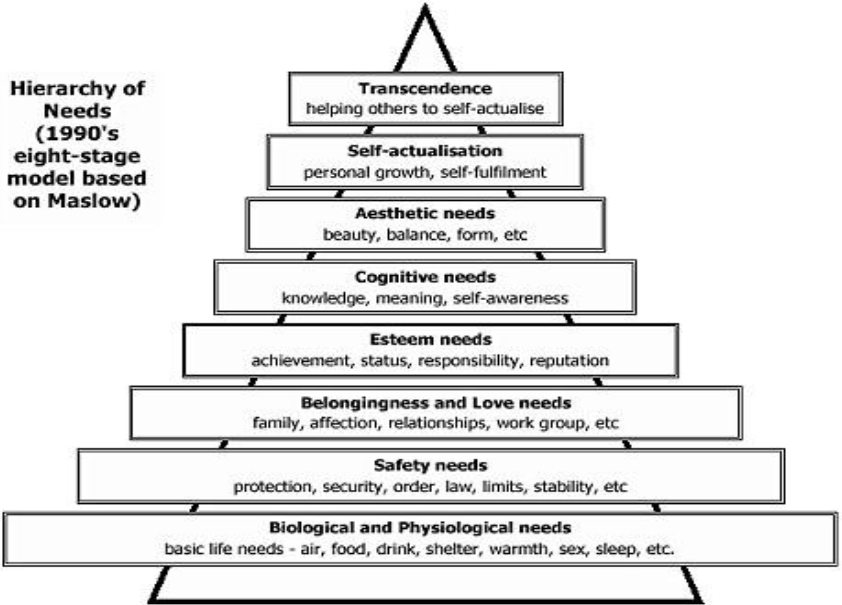
In Abraham Maslow’s theory of Hierarchy of needs, self-actualization is the deepest need of every human existence; and this model is an evolution in the same direction. While Self transcendence is our penultimate motto in life, the other levels of hierarchy also need to be satisfied. This model in its steps ensures that we constantly measure our ‘P vs P’( Performance vs potential) and periodically re-design our life to match our needs and purposes.

Sonali_Banerjee_Dutta_coaching_model1

Thus it’s indicative from Maslow’s model that deepest need of a human life is to provide and serve a larger cause in life. Historically we admire, worship and aspire to be givers. Giving comes naturally as we move towards PEACE model as it facilitates and establishes connection with our deepest resources and how we can contribute and accomplish our need to give in this universe, without risking our own survival. It’s imperative that the basic levels of life, need to be at peace all the time for the individual to progress to the self-transcendence phase… As a person who is under threat biologically, psychologically or physiologically, would find it very challenging to engage in self –actualisation leave aside self- transcendence. Sometimes we live in the ambiguity of which phase have we graduated to and how long can we sustain the same. To constantly calibrate and set our purpose in perspective, can save us from the chaos or confusion that we could get entangled in.

State player to a Corporate Leader| Coaching| Entrepreneur | Author| Motivational Speaker|

My journey has been full of trials and tribulations!! Quite accidentally I got into the training of badminton in my life, and its been one of the most impactful learnings in my life. The sport not only gave me the reason to get up early every morning and also work towards excellence in my fitness -thinking and agility!!

From a very tender age the only dream I ever had was to be a teacher! Specially when I got married at an age of 18 the conviction was even higher…as somehow it gave me the feeling I could manage a great balance of family and profession by was of being a teacher! As a god’s child I was used to being blessed with my desires! Soon after my graduation in English Literature I got to enrol for my Masters and during masters I first joined NIIT, followed by South Point ( Largest school in south east Asia) My happiness new no bounds! By then I was already a wife and a mother! However soon I realised a teacher worked really hard teaching -correcting papers and also handling expectations of students; yet wasn’t very rewarding in many ways, one of them being how one is compensated. I saw my cousins and others leading a flamboyant life travelling across doing corporate roles etc…The desire soon crept in that can’t I also work on being a corporate leader! The journey of growth had a lot of hurdles and learning and soon I found myself as a leader of a department in a corporate world. Leading teams of 100+ mentoring my teams and also designing programs for the entire organisation. Life was life a roller coaster ride with lots of travel and new projects -overseas clients etc. However soon I realised I was stagnated again doing more of the same everyday and the need to learn and grow was very fervent. Thus I took to my next level of learning and got certified as an executive coach, desirous of supporting CEOs and senior leaders to achieve their goals. Thus the transition from being a leader to a coach and then to an entrepreneur!

However the glorified role of CEO was then truly revealed after I took to setting up a startup!! It was life falling into an ocean where every day was learning of new things and how I could cope with the challenges. While its been the most learning experience of my life… it also came up with a lot of stress and strain.

While I was drowning in demands of clients -vendors and also financial planning, I found something that transformed me and facilitated growth once again …this time it was the need to express through writing and speaking.

By the time I reached my 40+ life has truly given me immense opportunities to learn and grow everyday!! Taking risk while on this path has been one of the tools, apart from the learnings from people -process and various situations….

Though the highs and lows have been crazy its always been a great experience!!

Life Experience …

The best things in life come through varied experiences. Sometimes its extremely unexpected yet thought provoking. Friends and foes alike life teaches you to rise above the material existence. Empty handed we come and go from the surface of the earth, and this realisation barely dawns on most us… Into the realms of eternity we venture around like vagabounds not knowing the true essence of our living or learning during this journey.
Temporary passengers in this journey of life, we constantly venture for some mirage which when achieved another one is born. Each and every anecdote in this journey of life leaves behind an eternal feeling of unquenched thirst for more…Is that what we are here for…or is it something more to explore…
Best pleasures in this journey is to give and shower happiness around us…as these are the memorable moments that linger on … definitely enhance our life. The learning of every experience or phase also enriches the immortal soul…

Significance of Soft Skills

In the global village of today, skill proficiency is the greatest differentiator and the back bone of business. As per, Thomas Friedman every professional is up in the global market and has to be more advanced than his or her peers in the domain; to contribute effectively and thereby be an employer’s choice in the unpredictable economic times. The top talent is always the first choice for the industry leaders, thus, a challenge for every organisation in IT, ITES, KPO and BPO sectors is bringing other employees up to par so as to run a successful business. To address this paradigm shift, Human resource and training professionals are coming up with innovative methods to better manage the human capital erosion and development.
The hard and the soft skills are equally important in this Knowledge era. In fact, the higher one goes up the organizational pyramid, the more the need for softer aspects becomes imperative. Managing clients, reportees, vendors and also the various stakeholders necessitates high emotional and social quotient for every business leader. Thus to create skilled workforce the understanding of various dimensions of soft skills is very significant.

The ACE of Soft Skills can be referred as a manual for this need. It can play a humongous role in development of talent and also in constantly upgrading skill levels. This book authored by Gopalaswamy and Mahadevan Ramesh explores three crucial segments of soft skills namely Attitude, Communication and Etiquette. 
Part I of the book elaborates on various aspects of Attitude, right from a personal grooming perspective to managing escalations when things go wrong at work. The linkage of every topic with vivid examples and how the same relates to the larger picture definitely supports the reader to relate things back to work environment.

Part II of the book showcases the most significant aspect of life whether personal or professional –Communication! How every method of communication can accomplish results is very important aspect of the book. This is one area where there is a global challenge in all walks of life… economic, political and business all can improve if we had denizens understand and use the techniques of communication appropriately. It’s never one size fits all, thus one needs to tweak the style in pertinence to the requirement or the need of the hour. 

Part III of the book encapsulates Etiquette –where the cultural dynamics play havoc. Hopefully the important aspects of etiquette shared in this book would support professionals to navigate through some of the day to day challenges.
The book covers a wide range of topics—a gamut of nearly 40 essential soft skills—including personal accountability, listening skills, business proposals, and the role of small talk and humour at work. The numerous case studies, illustrations, figures, tables and quotations offer an insightful, practical and ready to emulate practices for young professionals. The book can be used as a tool for self paced learning for executives and first line mangers. Soft skill has often been dealt with ridicule by people who cannot fathom the importance of the same. However with increased emphasis on cultural sensitivity, working across global teams, project work, presence, poise, client dealings and so on; the need for soft skills has become mandatory. 
The book could also serve as a repository of soft skills topics for learning professionals and institutions for their workshop content.
While the book addresses the challenges for executives, young professionals and also for the first line managers the mid and the senior levels would need more iterations on the same topics to develop finer social and emotional attributes and skills.
Though experience is the best teacher, following practices of some of the experienced preachers can also go a long way in accomplishing milestones in ones journey to success in life. Thus the lucid and candid language with lots of business scenarios cited by the authors in this book is surely exemplary and will give every reader an insight to the myth of soft skills and how it can be used to great advantage in day to day business or even personal life.