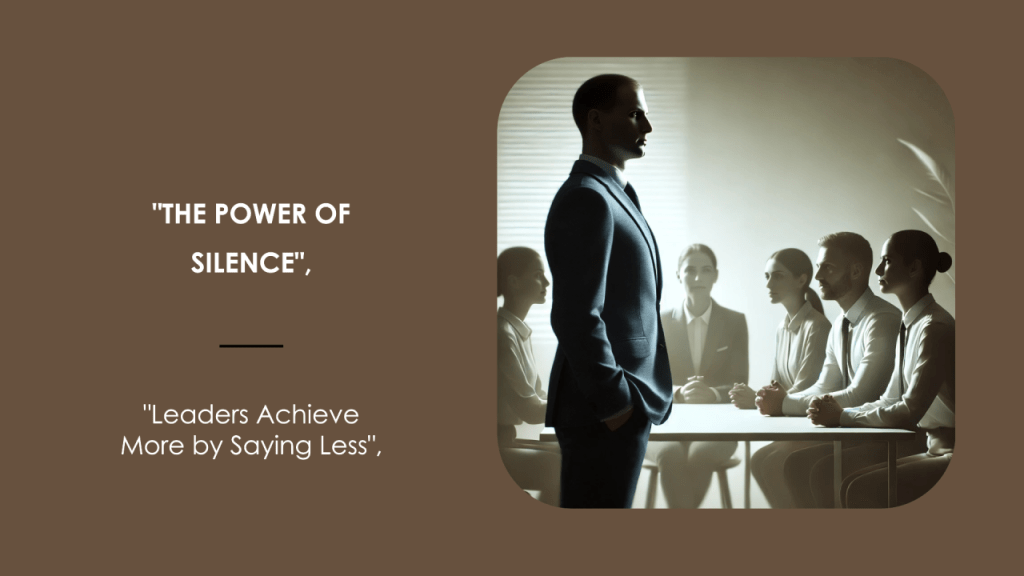
We often pride our ability to articulate what we understand of the world around us and also to get our teams to action. In the high-decibel world of leadership, silence often goes underrated. We’re conditioned to think that strong leaders speak with conviction, fill every room with their presence, and always have the next answer ready. Silence is undermined as boring and ineffective, so much so that leaders who silently do their work right, are often ignored when it comes to recognition and progression in organisations.
Recently, after my viral bout when I was asked by my daughter (training to be a medical practitioner) to stay silent, and focused all my energies into planning -writing -creating, I realised I could leverage silence at a different level!!
Too much of talking can be often counter productive. As a teacher -trainer- professor in the beginning of my career, speaking was one of my primary skill in articulating my knowledge and empowering my students. As a manager and leader during my corporate career I was mostly rewarded for getting my teams into action, and facilitating rather than lecturing!! However when I got certified as a coach, ICF mandated us to get into only 20% of speaking (not giving answers but asking powerful questions!) and listening 80% of the time to the coachee who is the master of their life! This was major paradigm shift!!
As a parent, I used to be worried for my children while they were growing up, as they refused to speak, unless really necessary!! However today I see them avoiding a lot of unwanted conversations, and levering their silence to demonstrate a strong leadership presence!! While this may not work for an actor, standup artist or speaker on stage, this surely is primary need for powerful leaders -coaches -mentors who want to bring out the best in others.
“Silence is one of the great arts of conversation.” — Cicero
In fact here’s a truth that executive presence demands we embrace: Silence isn’t the absence of leadership—it’s often its most powerful expression.
Silence as a Strategic Tool
In coaching senior executives, I’ve witnessed moments where a pause—not a point—shifted the room. The CEO who paused before responding to a contentious board query. The VP who let a silence linger after asking her team, “What’s really getting in our way?” These were not awkward gaps. They were calculated space-makers. And they changed the dynamics. Silence gives you time to observe, reflect, and choose.
It tells the room, “I’m listening,” rather than “I’m reacting.”
The Neuroscience of the Pause -Research from Harvard and MIT shows that strategic pauses reduce cognitive overload, helping others process information and stay engaged. Silence also triggers active listening in teams, builds psychological safety, and increases your perceived gravitas. In my coaching work with CXOs, I often say: “A pause adds weight to your words. Don’t fear it—use it.
Where Leaders Can Leverage Silence
- During High-Stakes Meetings: A well-placed pause before answering difficult questions signals confidence, not hesitation.
- In Performance Conversations: Silence after a tough question gives the other person space to reflect—and opens a door for authenticity.
- In Conflict: Rather than defending, try listening fully. Silence de-escalates ego and restores focus on resolution.
- In Storytelling or Public Speaking: A beat before a powerful insight helps it land. Your message is heard not in your voice, but in the space it echoes.
Practicing Silence with Presence. Try this simple executive practice for the week ahead:
- Plan your talk time and also what you want to share
- Pause for 3 seconds before responding in your next meeting.
- Ask one powerful question, and let the silence do the work.
- Notice your discomfort, and stay with it. Silence is uncomfortable only until it becomes strategic.
Final Thought
Leadership isn’t about volume. It’s about volition—the intent behind every action, including non-action. When used mindfully, silence isn’t passive. It’s presence.
So, the next time you walk into a room, remember:
You don’t have to say more to mean more. Do share your thoughts!!!
 drsonaliduttabaanerjee